
Review · NETHERLANDS SCOOTER TOURS
Delft – Step/scootertour in and around the city
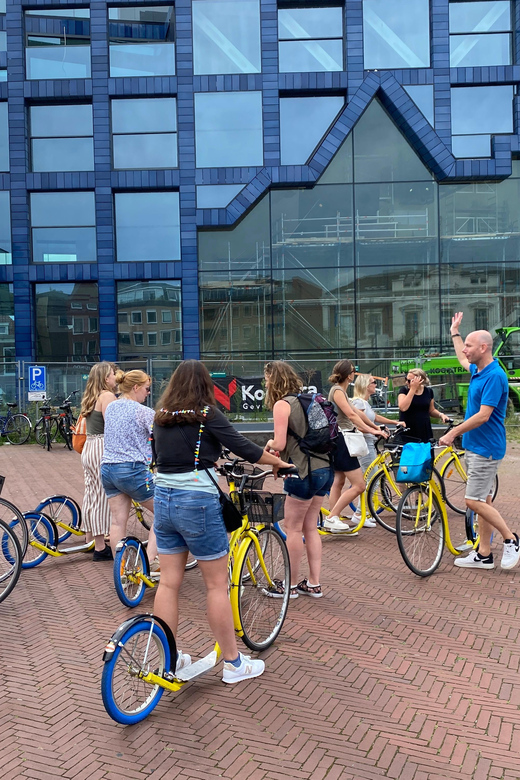
Delft looks different from a scooter. In 90 minutes, you move beyond the postcard center to Agnetapark, a quiet garden village, and Hofje van Pauw, a tucked-away courtyard dating from 1707. Guides such as Frans and Kevin add local stories as you ride between stops.
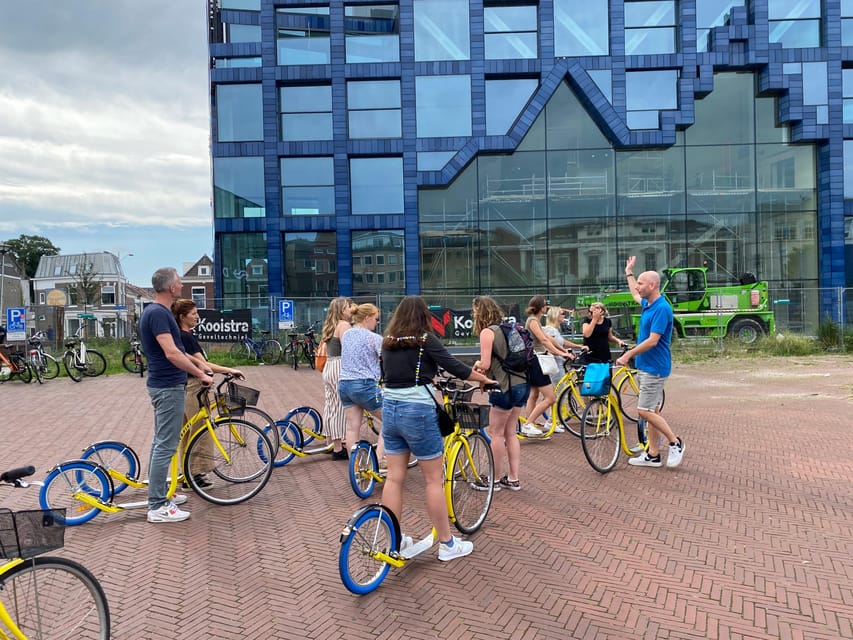
I like the mix of famous sights and less expected corners. The tour also gives you a look at modern Delft, where space opened up after the railway moved underground. The catch is the vehicle: this is a traditional, non-electric scooter, so you will need to push and steer yourself, and it may feel tiring in warm weather.
Key points to know before you book
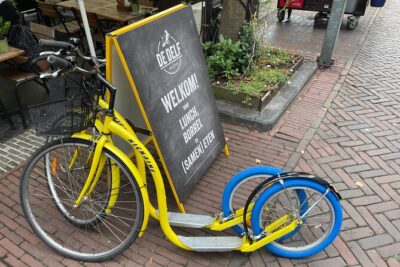
- Non-electric scooters make this an active tour: You ride a Dutch step scooter, not a motorized vehicle.
- Agnetapark is the route’s most distinctive stop: Learn about Jacques van Marken and his early ideas about community life.
- Hofje van Pauw offers a quiet change of pace: This small courtyard is easy to miss on a standard city walk.
- The route reaches both old and new Delft: Modern architecture, Mill de Roos, historic gates, canals, and old churches all fit into one short outing.
- Small groups keep the tour personal: No more than 10 people join each departure, with guiding in English or Dutch.
- The route suits active visitors aged 16 and older: You need to be able to ride a bike and manage a non-electric scooter.
Why a scooter tour works well in Delft
Delft is compact, but its sights are spread across different parts of the city. A walking tour concentrates on the center, while this route takes you outside the usual circuit without requiring a half-day commitment.
The scooter gives you a useful middle ground. You cover more ground than on foot, but you still travel slowly enough to notice streets, gardens, and old buildings. You stop often for about 15 minutes of explanation and photos, then ride on to the next story.
The route is not a speed run. The supplied timing suggests six main stops at about 15 minutes each, including Delft’s modern area, Agnetapark, Hofje van Pauw, the Eastern Gate, Markt, and the Old Church. That leaves enough time for short rides between them and a relaxed return to the starting point.
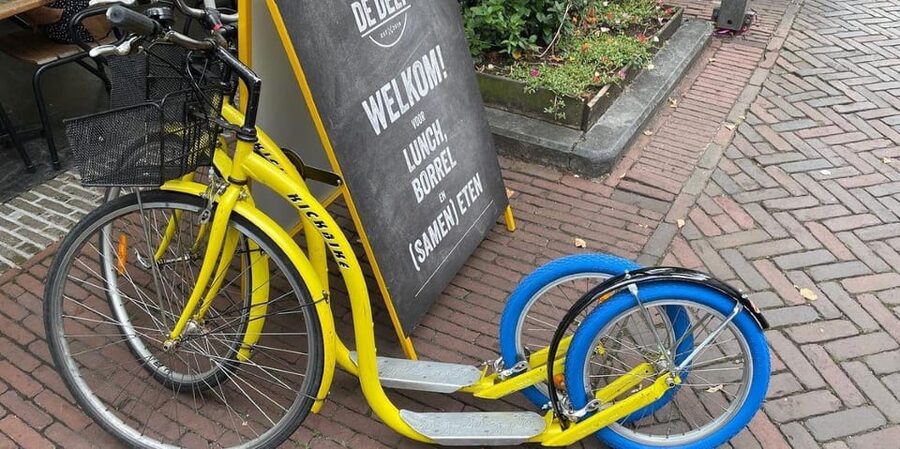
The ride begins at Oude Delft 113, near restaurant De Delf. This is also where the scooters are kept and where you finish. The small group limit of 10 matters here. Delft has narrow streets and busy central areas, so a compact group is easier to manage than a long line of riders.
More rides around the world:
- Florence Vespa Tour: Tuscan Hills and Italian Cuisine
★ 5.0 · 4,019 reviews - Scooter Tours of Red Rock Canyon
★ 5.0 · 2,174 reviews - Vespa Sidecar Tour By Night with Pickup
★ 5.0 · 1,803 reviews
Starting with modern Delft
The first section takes you toward the modern part of Delft. This may sound less exciting than canals and historic churches, but it gives the tour a useful wider view of the city.
The railway now runs beneath Delft, leaving more room for construction above ground. The result is a contrast between old streets and newer buildings, with modern architecture that the tour presents as practical and innovative.
This opening section helps you see Delft as a living city rather than a preserved museum. You get the old center later, but first you see how the city has changed and made room for new development.
The drawback is simple: if your main goal is Delft’s traditional beauty, the modern opening may feel like a slow start. I see its value, though, especially if you have already seen the central canals or want more than the standard picture-book route.
Mill de Roos and the working side of Delft
The route continues to Mill de Roos, a traditional windmill that is still in use. The stop adds a working element to the tour. You are not only looking at an old structure as a decorative object, but hearing about a mill that remains connected to its original purpose.
The mill also broadens the story of Delft. The city is closely linked with painted pottery, canals, churches, and civic buildings, yet its older economy depended on practical places such as mills. A short stop here gives you a clearer sense of the city beyond its grand center.
The available information does not promise a long interior visit or a special demonstration, so you should treat Mill de Roos as a guided sight and photo stop rather than a full museum visit. That keeps expectations sensible.
Agnetapark, Jacques van Marken, and an early social experiment
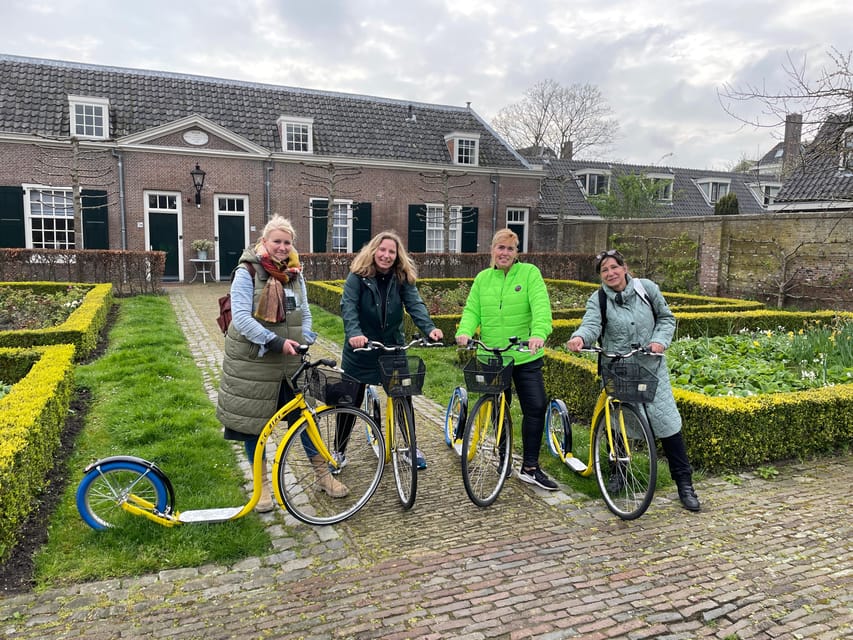
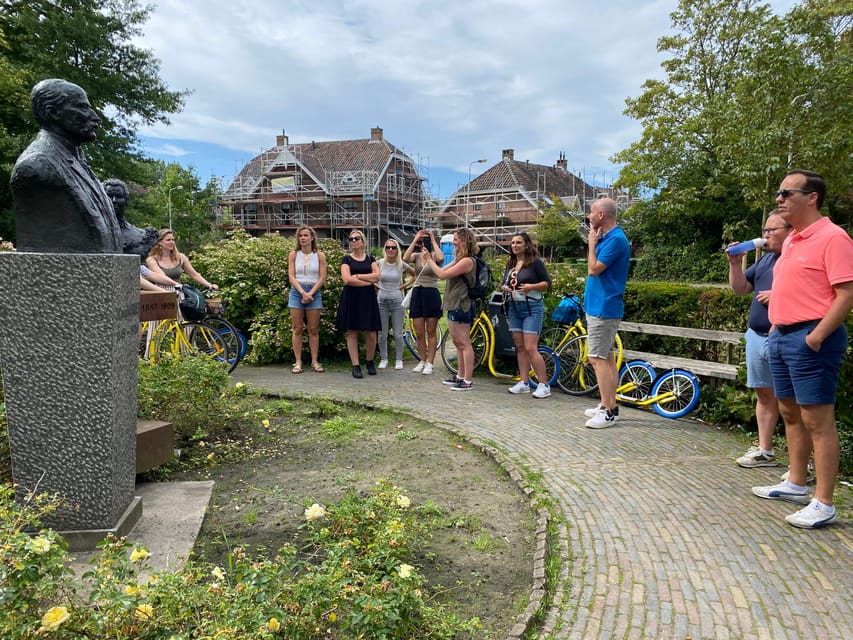
Agnetapark is the most unusual part of the route. It is a peaceful garden village created in connection with Jacques van Marken, whose ideas about work and community were well ahead of his time.
Here, your guide explains the story of van Marken and his wife, often called the Marken couple in the tour’s storytelling. The point is not just the appearance of the neighborhood. Agnetapark represents an attempt to create a better setting for workers and their families, with a more humane approach to daily life.
That social background gives the stop real weight. You are not simply photographing pretty homes and gardens. You are looking at a planned community and considering the ideas behind it.
Agnetapark also changes the mood of the ride. After the modern buildings and the mill, you reach a quieter area where the focus shifts from movement to listening. Guides Frans and Kevin have been specifically praised for filling the route with stories, and this is the kind of stop where a good storyteller can make a clear difference.
Allow yourself to slow down here. The tour includes about 15 minutes for explanation and photos, but the value comes from the context your guide adds. Without that, Agnetapark could look like a pleasant neighborhood. With the story, it becomes one of the route’s strongest stops.
Same streets, a different set of wheels:
- Rome Morning Vespa Sidecar Tour in Rome with Cappuccino
★ 5.0 · 1,771 reviews - Budapest Small-Group Guided Tour on MonsteRoller e-Scooter
★ 5.0 · 1,517 reviews - Ho Chi Minh City: Food Tour by Scooter with Eleven Tastings
★ 5.0 · 1,502 reviews - Chianti Vespa Tour with Lunch from Florence & E-car Option
★ 5.0 · 1,453 reviews
Hofje van Pauw, a courtyard from 1707
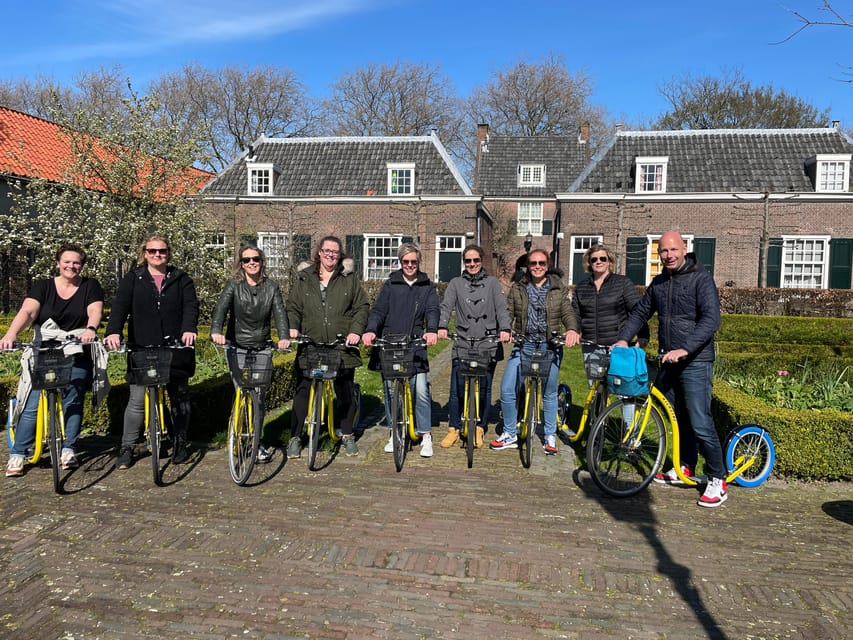
Hofje van Pauw is another place that rewards a guide’s explanation. Founded in 1707, this small courtyard has an intimate feel that contrasts with Delft’s larger public squares and churches.
A hofje is a courtyard housing complex, often connected with charitable support. Here, the guide tells you about the woman who founded Hofje van Pauw and explains why the place matters. The setting is described as idyllic, and that is easy to understand: it offers a calm pocket away from the movement of the central streets.
This is a good example of why the tour goes beyond the standard center. You might walk through Delft and never find the courtyard on your own, or pass it without knowing what you are seeing. The guide supplies the missing piece.
The courtyard is not a major attraction with a long list of displays. Its appeal is scale, quiet, and the personal story behind its creation. If you prefer grand architecture and large museums, this stop may feel modest. If you like overlooked corners with a human story, it will likely be one of the highlights.
The Eastern Gate and Delft’s older edges
The Eastern Gate gives the tour another piece of Delft’s historic structure. Gates helped define the limits of a medieval city, and this stop lets you think about how Delft once controlled movement into and out of the town.
The route does not spend the entire outing in the center. That matters because the Eastern Gate helps connect the quieter neighborhoods with the old city core. You see Delft as a place that grew outward from defensive walls and city entrances, not just as a collection of attractive canals.
Expect a photo stop and a guided explanation of about 15 minutes. The visit is brief, but the route’s variety depends on these short pauses. You ride, stop, listen, take pictures, and then continue. That rhythm keeps the 90 minutes moving.
Markt, the New Church, and town hall
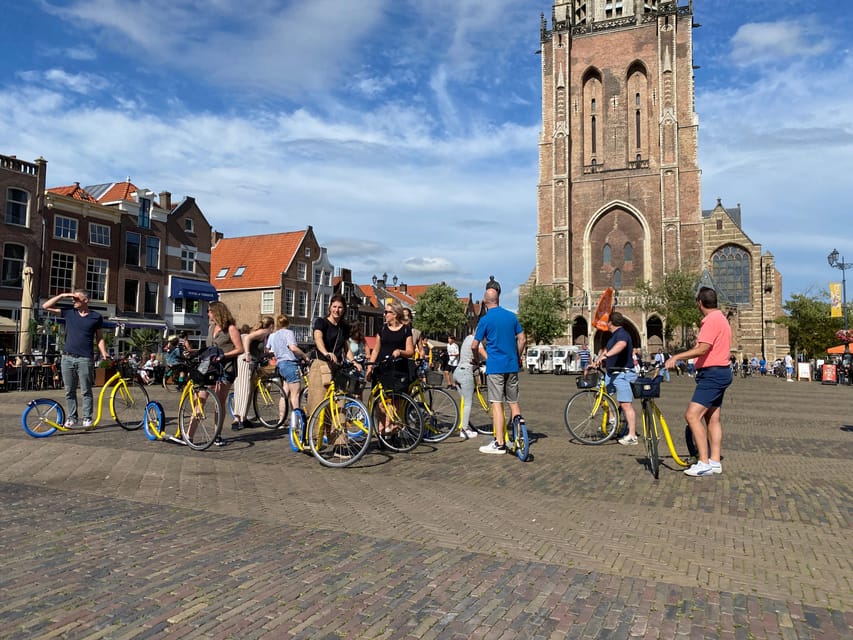
The ride returns toward the heart of Delft at Markt, the city’s main square. This is the grandest section of the tour, with the New Church and town hall facing the open space.
The square gives you the broad civic view that smaller stops cannot provide. The New Church brings a strong vertical presence, while the town hall represents Delft’s political and public life. Your guide points out the main features and gives you time to take photographs.
Markt can feel busier than Agnetapark or Hofje van Pauw, especially if you visit at a popular time. That contrast is part of the experience. One moment you are in a quiet courtyard, and soon after you are in the city’s public center.
If this is your first visit to Delft, pay close attention here. The square is one of the places you will probably want to revisit on foot, since a scooter stop gives you an overview rather than time for a detailed examination of every building.
The leaning Old Church
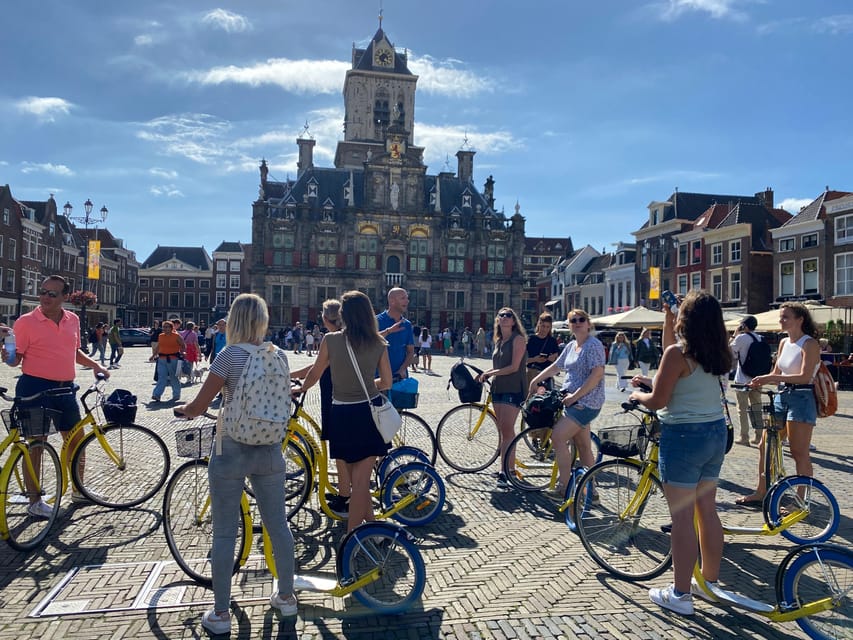
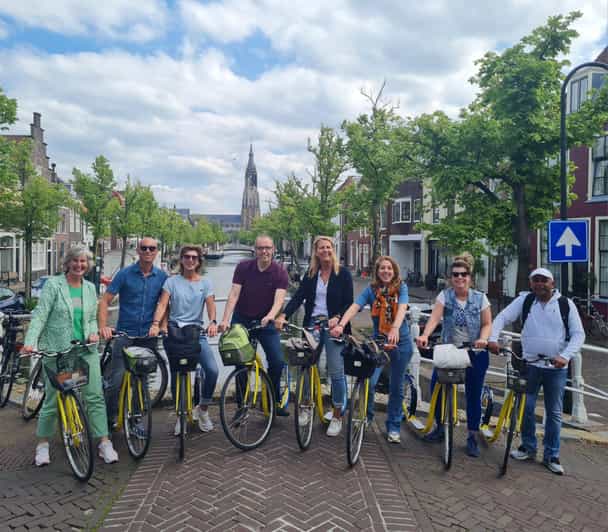
The Old Church provides the final major sight before the ride returns to Oude Delft 113. Its leaning tower is Delft’s most memorable architectural oddity, and the guide explains why it has become such a familiar part of the city’s identity.
The tower’s tilt gives the stop an immediate visual hook. You do not need a long lecture to understand why people stop and look up. Still, the guide adds the local context that turns a quick photograph into a better sense of the church’s place in Delft.
The Old Church also works well at the end of the route because it brings together several themes from the tour: old construction, changing urban space, and the difference between Delft’s quiet side streets and its best-known landmarks.
As with the other stops, this is a guided photo visit, not a full church tour. If you want to see the interior in detail, you will need separate time. This excursion is designed to give you a broad introduction to the city, not to replace every museum or monument visit.
What the non-electric scooter feels like
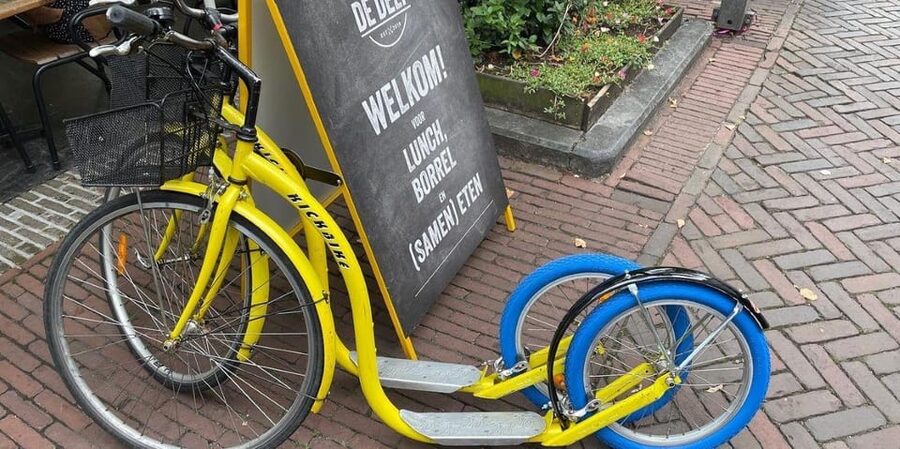
The Dutch word for this vehicle is step, and the activity is called a steptocht. The important point is that the scooters are not electric. You push along with one foot, much like using a kick scooter.
That makes the tour more active than its low price and short duration might suggest. One participant found the short riding sections helpful because the scooter took some getting used to. That is useful advice: do not expect to glide effortlessly for 90 minutes.
You need to be able to ride a bicycle, and the experience is not suitable for anyone who cannot ride one. It is also not suitable for children under 16, wheelchair users, or people with visual impairments.
Wear comfortable clothing and shoes that let you balance and push. The tour may feel warm on a sunny day because you are doing physical work, even though the route includes frequent stops. If you are unsure about your stamina, a standard walking tour may be a better choice.
Guide style and group size
The guide is central to the experience. The route includes several places that are pleasant but easy to overlook, so the stories give them meaning. Guiding is available in English and Dutch.
Frans and Kevin are named as guides associated with the experience. The information from the outing points to a friendly, story-led approach, with time for questions and some flexibility on the return route. Kevin has also been noted for showing useful places to eat in the evening, though you should view that as a possible extra rather than a guaranteed part of every departure.
A group of no more than 10 people is a strong fit for Delft. You can hear the guide without needing a loudspeaker, ask questions, and keep the group together on narrow streets. It also makes the ride feel less like a procession.
The tour is best for people who want local explanation between sights. If you prefer to move independently or stop for long periods at one monument, the fixed route and short stop times may feel restrictive.
Is $32 a good value?
At $32 per person, this is a reasonable way to get a first look at Delft’s wider city area. The price includes the non-electric scooter rental and a live guide, and the tour lasts 1.5 hours.
The value is strongest if you want three things in one outing: transport, orientation, and local stories. Renting a scooter on your own would not give you the same route or explanations, while a walking tour would cover less ground. The small group also makes the price easier to justify.
It is less compelling if you are focused only on the New Church, town hall, and Old Church. You can see those central sights on foot, and you may want more time at each one than this route allows.
The flexible booking terms help reduce the risk. You can reserve now and pay later, and cancellation is free up to 24 hours before the activity for a full refund. Check the available start times when booking, since the tour lasts 90 minutes but does not list one universal departure time.
Who should book this Delft ride?
I would choose this tour for an active first-time visitor who wants an overview without spending half a day on a formal excursion. It is also a good choice if you have already walked Delft’s center and want to see areas beyond the usual route.
The experience suits adults and older teenagers aged 16 and above who are comfortable on a bicycle. It works particularly well for small groups of friends, couples, and families with older children who enjoy a little exercise and informal storytelling.
I would think twice if you have limited mobility, poor balance, or a strong dislike of physical activity. The scooter is not electric, the ride can feel warm, and the route includes repeated mounting, pushing, stopping, and steering.
Should you book the Delft scooter tour?
Book it if you want a lively introduction to Delft that reaches beyond the center. Agnetapark and Hofje van Pauw give the route its character, while Markt, the New Church, and the leaning Old Church cover the essential sights.
Skip it if your priority is a slow architectural study, a museum visit, or a fully accessible outing. For the right rider, though, $32 buys a compact route, a small group, and stories that make Delft’s quieter corners worth noticing.
FAQ
Where does the Delft scooter tour start?
The tour starts at Oude Delft 113, at restaurant De Delf, where the scooters are kept.
How long does the activity last?
The tour lasts 1.5 hours.
What type of scooter is used?
The scooter is a traditional, non-electric step scooter. In Dutch, the activity is called a steptocht.
Which languages are available?
The live guide can conduct the tour in English or Dutch.
What places does the route visit?
The route includes modern Delft, Mill de Roos, Agnetapark, Hofje van Pauw, the Eastern Gate, Markt, the New Church area, and the Old Church.
Is the tour suitable for children?
The activity is not suitable for children under 16.
Do I need to know how to ride a bicycle?
Yes. You must be able to ride a bicycle to take part.
Can I cancel the booking?
You can cancel up to 24 hours before the activity for a full refund. You can also reserve now and pay later.
Newly added around the world
- Visit Hossegor on an all-terrain electric scooter – with a guide★ 4.7 · 4 reviews
- Electric Scooter Tour: Full Tour (Old Town + Ostrów Tumski)★ 5.0 · 3 reviews
- Vespa tour with Professional Photoshoot★ 4.8 · 22 reviews
- Vespa Voyage: Scenic Routes of Rome★ 5.0 · 41 reviews
- Vespa – Wine and Photography service in Rome★ 5.0 · 32 reviews
- Vespa Tour in the Hills of Bologna★ 5.0 · 22 reviews
- Rome: Vespa Tour with Gelato and Photos★ 4.9 · 7 reviews
- Vespa Tour with Professional Photographer★ 4.9 · 9 reviews
Netherlands Scooter Tours, compared.
Zaanse Schans: Windmills, Clogs & Cheese by Electric Scooter
Read our review →
E-scooter rental Volendam – Countryside of Amsterdam
Read our review →
Texel: Explore Texel with a Café Cruiser E-scooter
Read our review →
Browse the lists this tour appears in