
Review · SCOOTER TOURS WITH HIDDEN GEMS
Hanoi Hidden Gems: Jeep, Vespa or Motorbike Tour
Hanoi is easiest to understand from the back seat of a motorbike, Vespa, or open Jeep. This four-hour ride slips through narrow alleys, local markets, colonial streets, and farmland that most visitors would miss on foot. The route also reaches Long Bien Bridge, Banana Island, Huu Tiep Lake, and the famous railway neighborhood.
I like the mix of city and countryside, especially the sudden change from crowded lanes to banana and guava trees. I also like the chance to meet a local war veteran and finish at an authentic eatery and Vietnamese egg coffee stop. The main consideration is the traffic: Hanoi’s roads are busy, and this is not a quiet sightseeing ride.
Key points to know
- Choose your ride: Travel by motorbike, Vespa, or Jeep, with a helmet provided.
- See two sides of Hanoi: The route moves from tight Old Quarter lanes to farmland on Banana Island.
- Visit major landmarks: Long Bien Bridge, Huu Tiep Lake, the Opera House area, and Train Street are included.
- Hear personal history: A local family visit includes conversation with a war veteran about Vietnam’s past and present.
- Plan for the heat: The four-hour ride includes open-air travel, with a cooler stretch beside West Lake.
- Budget for drinks: Drinks are not included, and the final lunch stop should be clarified when booking.
Four hours from Hanoi alleys to Banana Island
This tour is built around contrast. One minute you are threading through the inner city, with scooters, shopfronts, and people working in the street. Soon after, the road opens toward gardens, dirt paths, and farmland.
That change is the main reason to book. A standard city tour can show you Hanoi’s famous buildings, but this ride gives you a look at how the city works between those landmarks. You see the grand streets, but you also see the service lanes, markets, family homes, and small passages that give Hanoi its character.
Your guide meets you in your hotel lobby. Before setting off, you receive a safety briefing and a rundown of the route. The English-speaking guide travels with you and explains the places along the way. If you want a guide in another language, an additional charge applies.
The activity lasts four hours, so the schedule is fairly full. You will not spend a long time at every stop. Think of it as a moving tour with several short visits and conversations rather than a slow museum-style outing.
More Vespa Tours in Hanoi
- Vespa City Tour &Train Street Female With Ao Dai Riders 4,5 Hours
★ 5.0 · 314 reviews - Hanoi Vespa Tours: Food + Culture + Fun on Army Vespa
★ 5.0 · 279 reviews - Vespa Female Ao Dai riders Night Street Food + See Train Street
★ 5.0 · 254 reviews
Jeep, Vespa, or motorbike: choosing the right seat
The experience can be arranged by motorbike, Vespa, or Jeep, and the choice affects the feel of the ride. A motorbike or Vespa is better suited to narrow alleys and gives you a closer view of daily life. The Jeep offers a broader, more sheltered seat and may appeal to anyone who prefers not to ride on a two-wheeler.
The supplied details do not specify how vehicle selection works, so confirm your preferred option before booking. Ask as well how many people can ride in each vehicle and whether the Jeep is available for your chosen departure time.
A helmet is provided. You should still wear comfortable clothing and secure anything loose. Hanoi traffic can be intense, especially on the main streets, and the route includes city riding rather than a quiet country cruise.
This is a private-group option, which matters if you want to ask questions or adjust the pace within the tour’s schedule. It is not suitable for wheelchair users.
Old Quarter lanes and the French Quarter
The tour begins in the dense center of Hanoi. In the Old Quarter, narrow alleys twist between homes, small businesses, food stalls, and local markets. These lanes are where the city feels most immediate. You are close to the sounds and smells of ordinary work, not separated from them by a tour bus window.
Riding through these streets also shows why a motorbike is useful in Hanoi. The vehicle can enter passages that would be difficult for a larger group. You get a quick but telling look at how residents shop, cook, repair, deliver, and socialize in compact spaces.
The route then reaches the French Quarter, where the streets widen and the architecture becomes more formal. The Opera House is among the landmarks pointed out by the guide. This section helps place Hanoi’s colonial-era buildings beside its older street life, rather than treating either part of the city as a separate attraction.
You should expect traffic noise and a brisk pace here. The guide will explain the sights as you ride, but you may not get extended time for photographs at every building. If photography is your main goal, tell the guide early and ask which stops allow a few extra minutes.
Long Bien Bridge and Hanoi’s working river edge
Long Bien Bridge is one of Hanoi’s most recognizable structures. Built during the French colonial period more than a century ago, it has become a lasting symbol of the capital.
The bridge is not just a photo stop. It also gives the ride a useful sense of Hanoi’s connection to the Red River and the older routes that shaped the city. Your view changes from enclosed streets to a wider setting, and the bridge helps explain how the city grew beyond its historic core.
Expect the visit to be brief compared with a dedicated bridge tour. The value comes from reaching it as part of a wider route, then continuing toward the less urban side of Hanoi. Keep your camera ready, but pay attention to the road and follow the guide’s safety instructions.
More Vespa Tours in Vietnam
- Hanoi Vespa Countryside Tour With Female Ao Dai Riders Half Day
★ 5.0 · 117 reviews - Hanoi Vespa Tours: Hanoi After Dark Vespa Food Tours
★ 5.0 · 83 reviews - Hanoi Back Streets Vespa Tours: Hanoi Vintage Vespa Tours City
★ 5.0 · 82 reviews - Hanoi Back Streets Vespa Tours: Hanoi Insider Vintage Vespa Tour
★ 5.0 · 56 reviews
Banana Island: farmland inside the capital
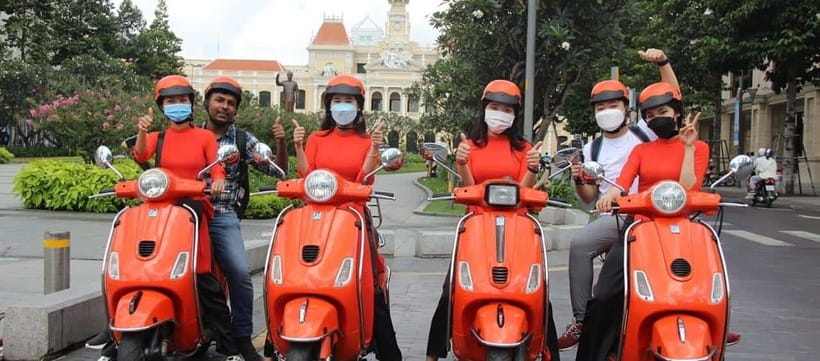
After Long Bien Bridge, the tour heads toward Banana Island. This is one of the route’s most unusual turns. You leave the heavy city traffic behind and follow dirt paths through gardens and farmland.
The area includes banana and guava trees, with green plots stretching around you. It is a useful reminder that Hanoi is not only a dense center of apartment blocks, shops, and scooters. Agricultural space remains close enough to reach during a short city excursion.
This stop is best for travelers who want local texture rather than another polished monument. You may see a quieter side of the capital and get a better sense of the small-scale growing areas around it. The paths may be uneven, so the ride can feel less smooth than the main streets.
The route does not promise a farming activity or a long walk. You are passing through the area by vehicle, with the guide explaining what you see. That makes the stop easy to fit into a four-hour tour, but anyone wanting a detailed rural visit should choose a longer countryside outing.
West Lake, Huu Tiep Lake, and the B-52 remains
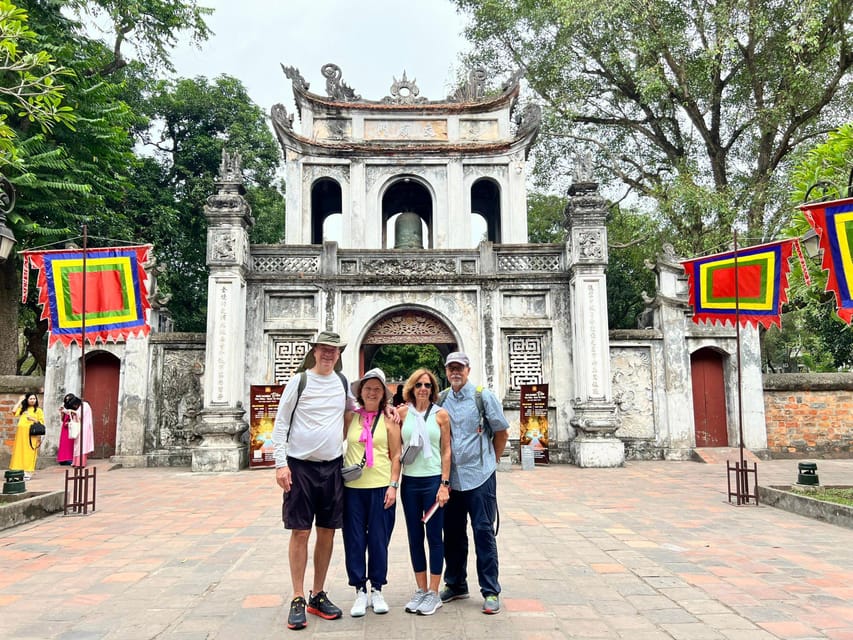
From Banana Island, the ride follows the shores of West Lake. The water brings a welcome change after the heat and noise of central Hanoi. The open air and cooler breeze can make this part of the tour especially pleasant.
The route then returns toward Huu Tiep Lake, a small body of water associated with the remains of a B-52 bomber. The wreckage is a stark reminder of the Vietnam War and one of the more unusual sights on the itinerary.
The guide’s role matters here. A piece of aircraft in a lake can seem puzzling without context, while a clear explanation connects the site to Hanoi’s wartime experience and the country’s later development. The tour focuses on stories and local perspective rather than a formal museum display.
Do not expect a large visitor center or an extended exhibit. This is a short roadside-style stop, and the area is part of an ordinary neighborhood. That is precisely what makes it feel direct, but it also means the setting is simple.
A local family visit and a personal view of Vietnam
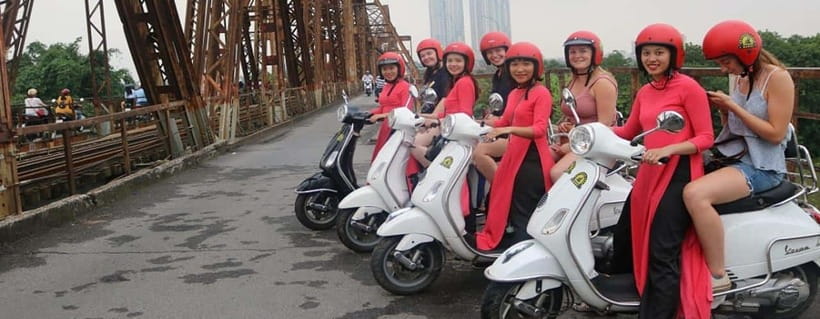
One of the most valuable parts of the ride is the visit with a local family. You have a chance to speak with the owner, a war veteran, about his childhood, Vietnam’s past, modern life, and the country’s continuing legacy.
This is different from hearing only official dates at a monument. Personal stories can show how national events affected one household and how memories change across generations. You should use this time to ask respectful questions about family life, customs, and the country’s transition into modern Vietnam.
The conversation is also a cultural exchange, not just a history lesson. The tour gives you a window into Vietnamese customs and everyday thinking through a direct meeting rather than a staged performance.
The available details do not give the family owner’s name or specify how long the visit lasts. If this conversation is a priority for you, ask the provider for more information when reserving. The visit is likely to be most rewarding for people who enjoy listening and asking questions, not for anyone seeking a quick series of photo stops.
Train Street and the city’s famous railway corridor
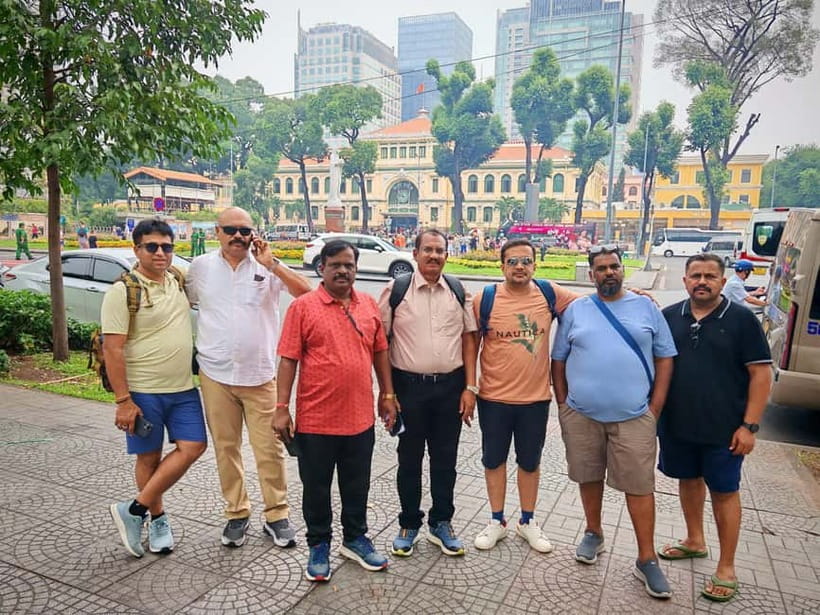
The return route includes the Reunification Train Street neighborhood. The railway corridor is known for tracks running through a tightly built residential area, with homes and businesses close to the line.
The tour treats it as part of a broader look at Hanoi’s neighborhoods. You are not simply checking off a famous photo location. You are also seeing how compact the city can become and how residents adapt to limited space.
Conditions around Train Street can change, so follow the guide’s instructions carefully. Do not assume you can walk anywhere along the tracks or wait in an unsafe position. The benefit of visiting with a local guide is that you can receive current directions and context while avoiding careless behavior.
The stop may be short, depending on local access and the day’s traffic. That is sensible. Train Street is a working neighborhood, not a theme park, and the people who live there should come before photographs.
Lunch and Vietnamese egg coffee
The ride ends back in the city at an authentic eatery, followed by a local cafe known for Vietnamese egg coffee. This is a fitting finish to a tour that has moved between street food districts, historic sites, and rural paths.
Egg coffee is made with a sweet, creamy egg mixture served with coffee. It is one of Hanoi’s signature drinks and a good way to end the ride, though drinks are not included in the tour price. The itinerary also includes a lunch stop, but the included services list does not clearly say that the meal itself is covered. Confirm that detail before you go and bring money for food and drinks.
The final stop gives you time to sit down after several hours on the road. It also lets you ask follow-up questions while the places you saw are still fresh. Do not expect a long restaurant visit if the group has spent extra time in traffic or at the family stop.
Is $70 good value for four hours?
At $70 per person, this is not the cheapest way to see Hanoi. It can still be fair value if you want private transport, a guide, a flexible vehicle choice, and a route that reaches both the city center and Banana Island.
You are paying for more than a ride between major attractions. The price covers the driver and English-speaking guide, transport by motorbike, Vespa, or Jeep, entrance tickets, and a helmet. It also saves you the work of planning a route through alleys, markets, the bridge, lakes, and countryside.
The value is weaker if you only want Hanoi’s famous buildings. You could see parts of the Old Quarter and French Quarter on foot for much less. This tour earns its price through the less obvious stops, the family conversation, and the transport between sharply different parts of the city.
The two points to clarify are food and vehicle choice. Drinks are specifically excluded. Lunch is part of the closing plan, but you should ask if the meal is paid separately. Also confirm your preferred ride before arrival.
Who will enjoy this Hanoi ride most?
I would recommend this tour to you if you want to cover a lot of ground in a short visit and prefer street-level views to a large coach. It suits first-time visitors who want an introduction to Hanoi’s main areas, as well as returning visitors looking for a different side of the city.
It is also a strong choice for anyone interested in local history and personal stories. The war veteran visit and the B-52 wreck provide more depth than a simple city circuit.
You should think twice if you dislike traffic, open-air rides, or quick transitions between stops. The tour is active and road-focused. It is not designed for wheelchair users, and it may not suit anyone who needs a slow, fully accessible route.
Free cancellation is available up to 24 hours before the tour, and you can reserve now and pay later. Starting times depend on availability, so check the schedule before fixing the rest of your Hanoi plans.
Should you book this tour?
Book it if you want Hanoi in one lively four-hour sweep: old lanes, French-era streets, Long Bien Bridge, farmland, lakes, wartime history, Train Street, lunch, and egg coffee. The strongest parts are the access to Banana Island and the personal family visit, not simply the famous landmarks.
Skip it if you want a quiet walking tour, a long museum visit, or a tightly structured food tour. For most visitors who are comfortable on the road, the $70 price is justified by the private-group option, transport, guide, and unusual route. Confirm the vehicle, lunch cost, and meeting details before paying.
FAQ
How long does the Hanoi hidden gems tour last?
The tour lasts four hours. Starting times depend on availability when you book.
What vehicles can I choose?
The tour provides transport by motorbike, Vespa, or Jeep. Confirm your preferred vehicle before booking.
Is an English-speaking guide included?
Yes. An English-speaking guide is included. A guide in another language costs extra.
Are entrance tickets included?
Yes. Entrance fee tickets are included in the tour price.
Are food and drinks included?
The route ends at an authentic eatery for lunch and a local cafe known for egg coffee. Drinks are not included, and you should confirm whether lunch is covered before booking.
Is the tour suitable for wheelchair users?
No. The tour is not suitable for wheelchair users.
More back-street rides around Hanoi
- Ninh Binh HIGHTLIGHT & HIDDEN GEM Tour From Hanoi: Skip-The-Line
★ 5.0 · 4,212 reviews - Hanoi Vespa After Dark Street Food Tour -Hidden Gem-Train Street
★ 5.0 · 13 reviews - Enjoy Hanoi Like a Local – Vespa & Street Food Tour by Night
★ 5.0 · 3 reviews - Saigon: City Highlights and Saigon Unseen Scooter Combo Tour
★ 4.9 · 1,366 reviews
Newly added around Hanoi
- Beautiful Female Riders Vespa Red River Countryside Tour 5 Hours★ 5.0 · 23 reviews
- Hanoi Vespa After Dark Street food + Train Street+ Live Music★ 5.0 · 18 reviews
- Hanoi Evening Vespa Food Tour 04hrs★ 5.0 · 2 reviews
- Hanoi Vespa Tour Explore Red River Delta & Rural Villages 5 Hours★ 5.0 · 17 reviews
- Female Riders Vespa Night Street Food + Train Street food 4 Hours★ 5.0 · 35 reviews
- Vespa Tour Hanoi Life Rustic★ 5.0 · 4 reviews
- HANOI MUST SEE SITES Vespa Tour★ 5.0 · 3 reviews
- Hanoi Vespa Full Day City & Countryside with Female Ao Dai Riders★ 5.0 · 26 reviews
Scooter Tours with Hidden Gems, compared.

Ninh Binh HIGHTLIGHT & HIDDEN GEM Tour From Hanoi: Skip-The-Line
Read our review →
City Highlights and Saigon Unseen Scooter Combo Tour
Read our review →
Afternoon Saigon Unseen Adventure by Scooter |Opt: Ao Dai Riders
Read our review →
Saigon Afternoon Unseen Street Food by Scooter |Opt: Ao Dai Rider
Read our review →
Morning Saigon Unseen Adventure Scooter with Ao Dai Riders Option
Read our review →
Hoi An Vespa Tours: Hoi An Highlights and Hidden Gems
Read our review →

Hidden Gems Private Street Food by scooters with girl drivers.
Read our review →Browse the lists this tour appears in