
Review · QUAD BIKES
Ancient Athens Electric ATV Scooter Tour
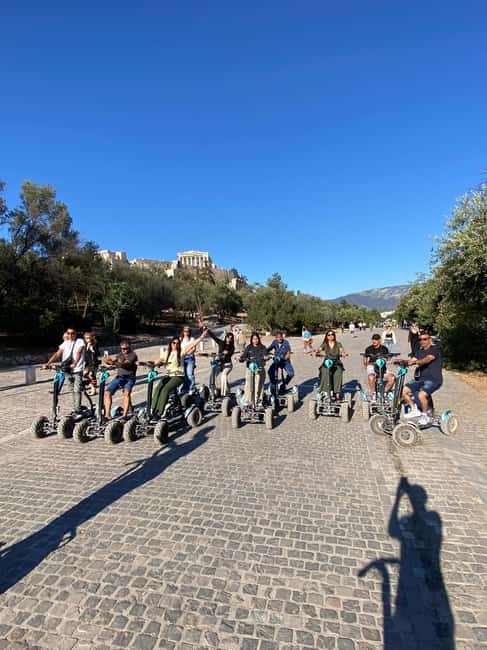
The clever idea here is to cover ancient Athens on a four-wheel electric scooter, rather than spend two hours walking between scattered ruins. From Plaka, you roll past the Acropolis, climb the Areopagus and Pnyx, then pass the Agora, Keramikos, Hadrian’s Library, and Roman Agora. It is a lively history lesson with wheels.
I like the small group limit of 10, which should make stops and questions easier, and I like the practical extras: training, helmet, insurance, water, and WiFi are included. The biggest consideration is the guide. One guide, Bill, earned warm praise for patience and local advice, while another guest found the commentary dull, so the quality of your visit may depend on who leads your group.
Key points to know before you book

- Four-wheel electric scooters: A stable, unusual way to cover central Athens without a long uphill walk.
- Two hills with big views: The Areopagus and Pnyx provide some of the best city and Acropolis viewpoints on the route.
- Ancient sites linked together: You pass the Acropolis, Herodes Atticus Theater, Keramikos, Ancient Agora, Roman Agora, and Hadrian’s Library.
- Small groups up to 10: The guide can give directions and historical explanations without managing a large crowd.
- Useful inclusions: Training, helmet, insurance, water, and WiFi are part of the $58 price.
- A guide makes the difference: Bill and Demi are named in particularly favorable comments, but the experience may vary by guide.
Why an electric ATV makes sense in Athens
Athens is compact on a map, but its ancient sights are spread across several neighborhoods. The Acropolis sits above the city, the Agora lies below it, and the Pnyx and Areopagus add uphill walking between major stops. In the heat, those distances can wear you down before you reach the next ruin.
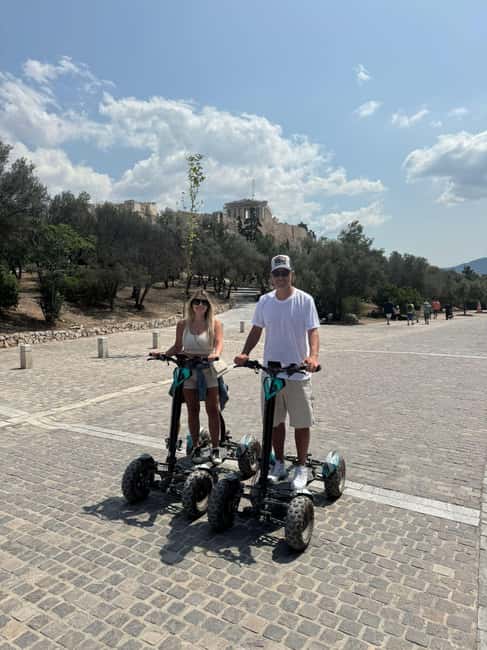
This tour uses a four-wheel electric ATV scooter to connect the sites. The format is not a standard sightseeing bus and not a walking tour with a quick photo stop. You ride through central districts, follow your guide, and pause at important places for views, explanation, and photographs.
The electric motor also keeps the outing quieter than a fuel-powered vehicle. You still share city streets with normal traffic, so this is not a traffic-free ride, but the scooter gives you a more open view than a bus and less footwork than a walking tour.
Before setting off, you receive training and a helmet. That matters if you have never handled this type of scooter. A previous rider described the vehicle as smooth, clean, and easy to ride, including on narrow streets. That is useful reassurance, though you should still be comfortable following instructions and riding in an urban setting.
More quad bike runs around Athens:
- Best of Athens Electric ATV Scooter Tour
★ 4.3 · 5 reviews - Modern Athens Electric ATV Scooter Tour
★ 5.0 · 4 reviews - Athens by Night Electric ATV Scooter Tour
★ 5.0 · 2 reviews
Starting in Plaka, Athens’ oldest-feeling quarter
The meeting point is in Plaka, the neighborhood below the Acropolis. Its lanes, traditional Greek atmosphere, and close position to the main ruins make it a sensible place to begin. You get oriented here, receive your equipment, and start the ride with the city’s oldest quarter around you.
Plaka is a good opening scene because it quickly shows the contrast that defines Athens. Narrow streets and small shops sit close to major classical monuments. You do not need a long transfer before the ancient sites begin.
The tour lasts two hours, so the pace is purposeful. You should expect several short stops rather than long visits inside every archaeological site. If you want to study individual ruins at length, you will need separate time later.
The Acropolis and the Odeon of Herodes Atticus
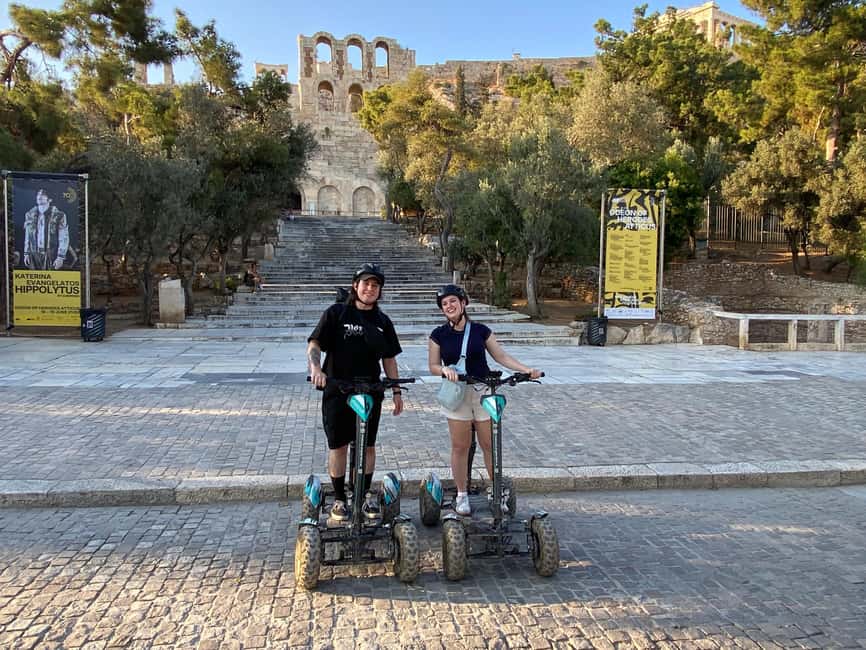
The first major section takes you alongside the Acropolis. You get views of the rocky hill and its monuments without the effort of hiking directly to the summit. The elevated citadel is the visual anchor of Athens, and seeing it from different streets helps you understand how completely it dominates the old center.
The route includes the Odeon of Herodes Atticus, a stone theater built for performances. Its curved seating area and imposing setting beneath the Acropolis make it one of the city’s most memorable ancient structures. Even from outside, the theater gives you a strong sense of how public entertainment worked in ancient Athens.
Do not book this ride expecting a full Acropolis visit. The information describes riding alongside the Acropolis and stopping at the theater, not an included entry to the Parthenon or a guided visit inside the Acropolis archaeological area. If the summit is a priority, schedule it separately and allow enough time for the climb and security process.
Areopagus Hill and the city below
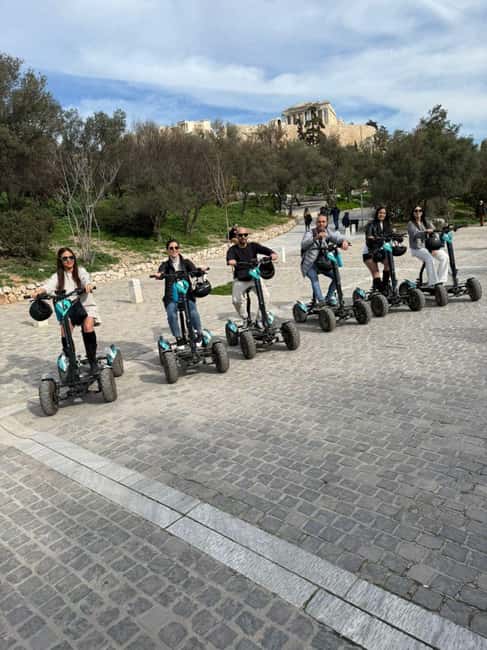
The scooter then heads toward the Hill of Mars, or Areopagus, an exposed rocky rise near the Acropolis. In ancient Athens, this was linked with judicial proceedings. Today, it is valued as much for its position as for its past.
From here, you can look across central Athens toward the Acropolis and surrounding districts. This is one of the tour’s strongest photography stops. The view helps turn a list of monuments into a clear picture of how the city fits together.
The ground around rocky viewpoints can be uneven, and the stop is designed for a short visit rather than a long rest. Wear secure shoes and take care around stone surfaces. The supplied helmet and training cover the riding side, but ordinary walking comfort still matters during stops.
More rides around Athens:
- Athens: Award-Winning Acropolis Guided e-Scooter Tour
★ 5.0 · 637 reviews - Athens Acropolis Official E-Scooter Guided Tour Fat E-Bike
★ 5.0 · 504 reviews - Athens: City Highlights Guided E-Scooter Tour
★ 5.0 · 277 reviews - Athens: Premium Guided E-Scooter Tour in Acropolis Area
★ 4.9 · 264 reviews
Pnyx Hill and the birthplace of democracy

Next comes the Hill of Pnyx, where ancient Athenian citizens gathered for political decisions. This is one of the most meaningful places on the route because it connects the physical setting with the idea of direct public debate.
The Pnyx is not just another viewpoint. It gives your guide a chance to explain why Athens is tied so closely to the origins of democracy. Standing above the city, you can picture citizens meeting in an open setting rather than inside a modern parliament building.
I like this part of the itinerary because it adds an idea to the monuments. The Acropolis shows religious and civic power, while the Pnyx points to public participation. In a short tour, that contrast gives the history more shape.
Thissio and the Keramikos Archaeological Site

After the hills, the ride moves through Thissio, a central neighborhood with strong links to the ancient sites. You then approach Keramikos, an area known for both pottery production and an ancient cemetery.
Keramikos gives you a less polished side of classical Athens. It was connected to ordinary work, burial customs, and the daily movement of people in and out of the city. That makes it a useful counterpoint to the grander Acropolis and theater.
The itinerary calls for a stop and explanation around the archaeological site. It does not state that admission is included or that you enter for an extended visit, so check the exact plan if seeing the excavations from inside is important to you. The value here is the connection between craft, commerce, and death in one part of the old city.
The Ancient Agora, where public life happened
The Ancient Agora was the center of public activity in Athens. This is where political business, trade, social encounters, and philosophical discussion came together. The names associated with Athens can feel abstract until you see the open area where people once met and argued.
The tour brings you to the Agora after passing through Thissio. Your guide can help place the site within the wider route: the Pnyx for public decisions, the Agora for daily civic life, and the Acropolis for major religious and ceremonial buildings.
Again, think of this as a guided look at the area rather than a guaranteed full archaeological-site visit. The two-hour schedule covers many locations. You may want to return later if you hope to spend time among the excavated buildings and columns.
For first-time visitors, this stop is especially useful because it connects several parts of Athens’ political story. I would pay close attention to the guide here and ask questions. A lively explanation can make this place memorable, while a flat presentation could leave it feeling like another pile of stones. One account specifically found the guide boring, so that is a fair risk to keep in mind.
Monastiraki, the flea market, and Roman Athens
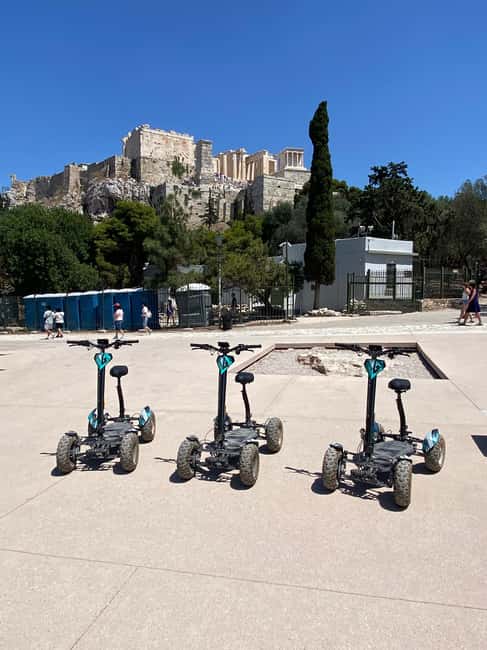
The ride continues toward Monastiraki Square, passing the flea market along the way. This brings you back into modern Athens, with local goods, antiques, and street activity replacing the quieter archaeological grounds.
The market section adds variety. You are not moving from ruin to ruin without a break. You see how the old center functions today, and you may spot items worth returning for after the tour. Since the scooter route is moving, do not expect time to browse properly during the ride.
You also pass the Library of Hadrian and the Roman Agora. These sites show that Athens continued to matter after the classical period. Roman rulers added their own public buildings, libraries, and commercial spaces, leaving another layer beside the older Greek remains.
This is one reason the itinerary works well in two hours. It does not focus on a single age. You move from classical democracy and theater to Roman construction, then back through the lively modern center. The historical sequence is easier to grasp when you see the buildings in the same outing.
Returning through Plaka
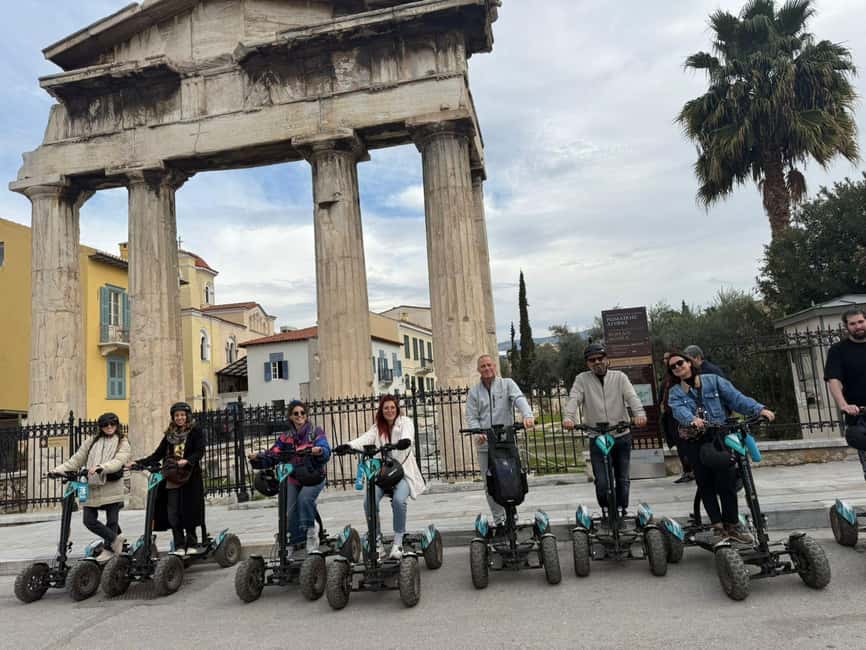
The final ride winds back through Plaka. After the wide views from the hills and the large ancient sites, the narrow lanes feel more intimate. This is a pleasant way to finish because you return to the same neighborhood with a better sense of its position below the Acropolis.
The tour includes water and brief breaks for hydration. That is a small but useful touch, especially in warm weather. The activity is only two hours, yet Athens’ sun, hills, and riding gear can make water welcome.
You also receive WiFi as part of the inclusions. The practical value depends on your phone plan and what you need during the ride, but it can help with maps or messages without using your own data.
What the $58 price gives you
At $58 per person, the tour sits in the middle range for a short guided city activity. You are paying not only for transport, but also for a guide, training, helmet, insurance, water, and WiFi. The four-wheel scooter is the main value: it lets you cover more ground than walking while keeping the group close to the streets and views.
The price makes the most sense if you have limited time in Athens, dislike long uphill walks, or want an orientation tour before visiting the major sites on your own. It is less convincing if your main goal is extended time inside the Acropolis, Agora, or Keramikos, since the itinerary is built around moving among many locations.
The group limit of 10 is important. A small group usually means less waiting and a better chance to hear the explanation at each stop. It also keeps the ride from feeling like a large convoy.
Free cancellation up to 24 hours before the activity and the option to reserve now and pay later add flexibility. Starting times depend on availability, so check the schedule before building the rest of your day around it.
Guides, languages, and the human factor
The listed guide languages are English, Spanish, and Hebrew. One French-speaking rider described receiving French commentary, but French is not included in the stated language list, so confirm that before booking if it matters to you.
The guide can make or break a short history tour. Bill received especially strong praise for being friendly, patient, and helpful with scenic routes and practical advice. Demi was also described as pleasant and clear during the scooter briefing. Those details suggest that the provider has guides who can make beginners feel at ease.
Still, one person found the guide’s presentation boring. That is not a reason to reject the tour, but it is a reminder that the ride itself cannot carry the whole experience. If you enjoy stories, ask questions at the Areopagus, Pnyx, and Agora. Those are the stops where a good guide can add real value.
Who should book this Athens ride?
I would recommend it to first-time visitors who want a quick orientation to the ancient center. It also suits anyone who wants views without walking every hill, couples looking for an unusual way to see Athens, and families with children aged eight or older who can follow riding instructions.
It is a good fit for active adults who are comfortable on a scooter and willing to share city streets. The four-wheel design offers more stability than a two-wheel scooter, but it is still a moving vehicle in an urban environment.
I would not choose it as your only archaeology visit. The route gives you an excellent overview, but the two-hour format favors range and variety over long, quiet study. Pair it with a separate Acropolis visit or a return to the Ancient Agora if you want the monuments to sink in.
Final verdict: a smart overview with one clear caveat
Book this tour if you want to see many parts of ancient Athens in two hours, avoid a long sequence of uphill walks, and enjoy a guide-led ride with useful equipment included. The combination of Acropolis views, Areopagus, Pnyx, Agora, Keramikos, Roman sites, and Plaka gives you a strong first look at the city.
The main caution is guide quality. Bill and Demi sound like strong choices from the available comments, but guide assignments are not guaranteed. If you accept that small uncertainty, the $58 price is fair for the vehicle, instruction, insurance, and broad route. For a compact introduction to Athens, this is a fun and practical choice. For detailed site visits, use it as your starting point, not your whole archaeology plan.
FAQ
Where does the Ancient Athens Electric ATV Scooter Tour begin?
The tour begins in the Plaka neighborhood, Athens’ oldest and most picturesque district.
How long does the tour last?
The activity lasts two hours.
What kind of vehicle do I ride?
You ride a four-wheel electric ATV scooter, described in the inclusions as a MIA Four ATV Scooter.
Is training provided before the ride?
Yes. Training is included before the tour begins.
Are helmets and insurance included?
Yes. The tour includes a helmet and insurance.
Which ancient sites and landmarks are on the route?
The route includes views of the Acropolis, the Odeon of Herodes Atticus, Areopagus Hill, Pnyx Hill, Keramikos Archaeological Site, Ancient Agora, Hadrian’s Library, and the Roman Agora. It also passes through Plaka, Thissio, and Monastiraki.
What languages are offered?
The listed guide languages are English, Spanish, and Hebrew.
How many people can join the group?
The tour is limited to 10 participants.
Can children join the tour?
Children under eight are not suitable for this activity.
Newly added around Athens
- 10 Days Tour Walk Athens Cycle Peloponnese Scooter Santorini★ 5.0 · 4 reviews
- GoPro Adventure Tour in Acropolis area by E-Scooter★ 4.5 · 8 reviews
- Modern Athens Electric ATV Scooter Tour★ 5.0 · 4 reviews
- GoPro Adventure Tour in Acropolis area by E-Scooter★ 4.9 · 19 reviews
- Best of Athens Electric ATV Scooter Tour★ 4.3 · 5 reviews
- Athens: Guided City Tour on an Electric Trikke Scooter★ 4.4 · 7 reviews
- Athens by Night Electric ATV Scooter Tour★ 5.0 · 2 reviews
- Athens: Premium Guided E-Scooter Tour in Acropolis Area★ 5.0 · 133 reviews
Quad Bikes, compared.

Scooter rentals ,Atv rentals and Buggy Rental,Nassau Bahamas
Read our review →



Tulum Guided ATV/Scooter, Muyil Ruins, Boat Eco, Float Down Mayan Canals + Lunch
Read our review →Browse the lists this tour appears in