
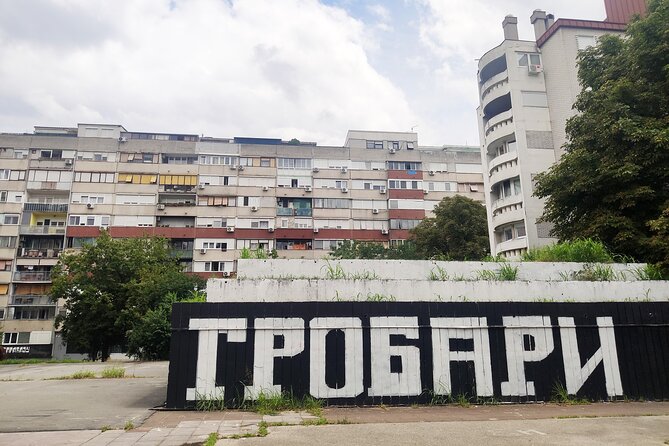
Review · ELECTRIC SCOOTER TOURS
E-Scooter Belgrade Hooligans Tour
Belgrade’s football culture is painted across its walls, stadiums, and neighborhoods. This three-hour e-scooter tour takes you from Dorcol to the Partizan and Red Star stadiums, with stops for graffiti, murals, and stories about the city’s famous football rivalry.
I like the way the tour connects street art with local football identity, rather than simply driving past major sights. I also like the scooter format: you cover more ground than on foot, yet still stop often enough to look closely and ask questions. The main consideration is that this is a niche experience. If football, graffiti, and supporter culture do not interest you, much of the tour may feel specialized.
Key points at a glance
- Dorcol’s divided football identity: See murals and graffiti linked to the neighborhood’s black-and-white and red-and-white communities.
- Two major stadiums in one outing: Visit Partizan Stadium and Red Star Belgrade’s Marakana.
- Guides with personal insight: Uros is closely connected with Partizan, while Marko is praised for his football and graffiti knowledge.
- Scooter travel through several districts: Reach Cubura, Vracar, Dorcol, and both stadium areas during one three-hour route.
- A small-group feel: The maximum group size is 20, with an e-scooter, helmet, and safety briefing included.
- Good afternoon pairing: The tour works well after a morning Communist-themed city tour, with a lunch break between them.
Belgrade’s football story begins on the walls
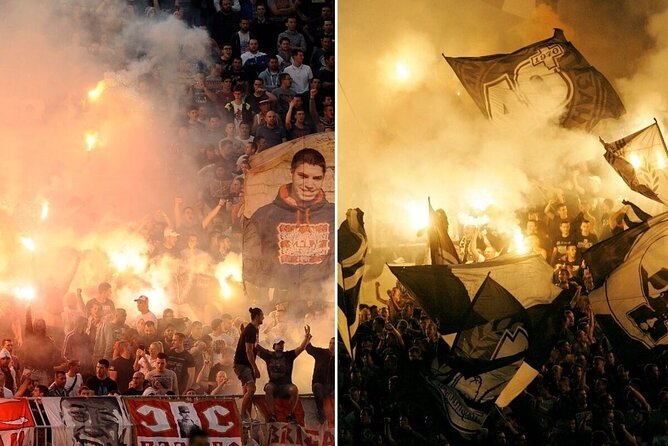
You do not need to attend a match to see how seriously Belgrade takes football. The rivalry between Partizan and Red Star reaches into neighborhood streets, where club symbols, slogans, murals, and supporter markings appear on walls and around stadium grounds.
The tour gives you a way to read those markings with help from a local guide. Names such as Uros and Marko are important here because the value is not just in spotting painted symbols. You need someone who can explain which neighborhood connects to which club, how the graffiti relates to supporter groups, and why a particular wall matters.
The experience is not presented as a standard city sightseeing ride. Its subject is the football culture around the city, including the intense supporter scene often described as the hooligan culture of Serbia. That makes the tone more direct and local than a general Belgrade highlights tour.
I would approach it with curiosity and respect. The word hooligan can sound sensational, but the actual experience described here focuses on graffiti, stadium surroundings, football history, and personal stories. It is not a match ticket, and it does not promise entry to a game.
More Electric Scooter Tours in Belgrade:
- E-Scooter CRAFT BEER and BREWERY Tour
★ 5.0 · 37 reviews - E-Scooter Zemun Tour
★ 5.0 · 26 reviews - E-Scooter Tour of Belgrade
★ 4.0 · 17 reviews
Why the e-scooters make sense
The route covers several parts of Belgrade, so an e-scooter helps connect places that would take longer to reach on foot. You ride through Dorcol, continue to the Partizan and Red Star stadium areas, and then visit Cubura and Vracar before returning to the starting point.
The scooters also keep the outing active. You are not sitting in a bus while the guide points through a window. You move through the streets, stop at murals, and then continue to the next part of the story. For a city tour centered on street art, that matters.
The equipment is straightforward. The price includes the e-scooter, helmet, and safety briefing. Personal expenses are not included. The experience is described as suitable for most participants, but you should still be comfortable riding an e-scooter in an urban setting.
A maximum of 20 people is allowed. That is not an especially tiny group, but it gives the guide a clear limit and should make the outing more manageable than a large open-ended street tour. The guides have also been praised for taking time to answer individual questions, which is especially useful when the group wants to stop and discuss a particular mural.
Dorcol: a neighborhood split by club colors
The first stop is Dorcol, with about an hour devoted to the neighborhood and its football markings. This is the longest stop, and that makes sense. Dorcol is where you begin to understand that Belgrade’s football rivalry is not confined to a stadium on match day.
The neighborhood is described as divided into a black-and-white section and a red-and-white section. Those colors point to the two major clubs represented later in the tour. The guide uses graffiti and murals to show how supporter identity appears in public space.
This is the part of the tour where I would pay closest attention to the guide’s explanations. A wall covered in names and symbols can look like random street art if you do not know the background. With context, the images become clues to neighborhood loyalties, football memory, and the way supporters mark territory.
You have about an hour here, so the visit is not a quick photo stop. That extra time should help you look at several examples rather than rushing to the next location. It also gives you room to ask about the artwork, the club references, and the local football culture behind them.
There is no admission charge for this stop. The drawback is that graffiti is part of an outdoor city environment. The exact condition of murals can change, and what you see depends on what remains on the walls on the day of your visit.
Partizan Stadium and the black-and-white side
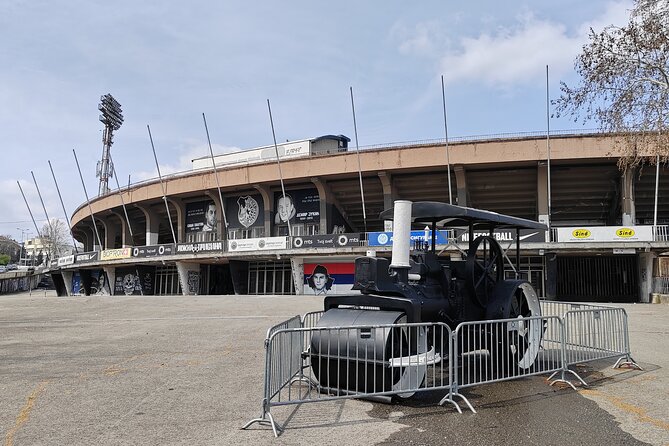
The next major stop is Partizan Stadium, with around 30 minutes to explore graffiti on the stadium stands. Partizan is one half of Belgrade’s central football rivalry, and the stadium visit gives the earlier Dorcol discussion a more defined setting.
The guide Uros is particularly associated with Partizan football and basketball, so his perspective may be especially useful if you want more than a quick identification of logos. His connection to the club gives the stop a personal angle, and the tour is designed to explain the supporter culture rather than simply show you the building.
You should expect the emphasis to be on the graffiti and stadium surroundings, not on a full stadium museum visit or a match experience. The supplied details do not promise interior access, a guided tour of the seating areas, or entry to a game. Plan on seeing the stadium area and its painted supporter markings.
Thirty minutes is enough for a focused look, but not enough for every corner of a large sports complex. That is part of the trade-off. The tour keeps moving so you can compare Partizan with Red Star later in the afternoon.
More rides around Belgrade:
- Belgrade Hooligans E Scooter tour
★ 5.0 · 16 reviews - E-Scooter Communist Yugoslavia Tour
★ 5.0 · 15 reviews - E Scooter Craft Beer and Breweries tour
★ 5.0 · 12 reviews - E-Scooter Street Art Tour
★ 4.5 · 6 reviews
Red Star’s Marakana and the other side of the rivalry
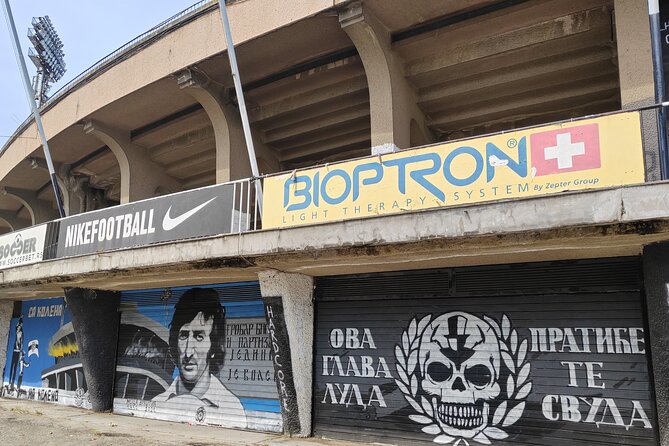
Red Star Belgrade Stadium, commonly known as Marakana, receives another 30-minute stop. Here you see graffiti on the stadium stands and learn about the other major supporter culture in the city.
The value comes from seeing both stadiums in the same outing. If you visited only one, you would understand one club’s identity but miss the contrast that makes Belgrade football so distinctive. The paired visits turn the tour into a look at a rivalry, not just an introduction to a single team.
Marko has been praised for explaining both football and graffiti, and his style appears to suit visitors who want to ask detailed questions. He is also described as taking time with the group rather than rushing through the stops. That matters at Marakana, where the visual material may raise as many questions as it answers.
Again, you should not book this expecting a match-day atmosphere. The tour is about the stadium settings, the graffiti, and the stories around them. If you happen to visit during an important football weekend, the subject may feel especially timely, but no match attendance is included.
Cubura, where neighborhood identity gets personal
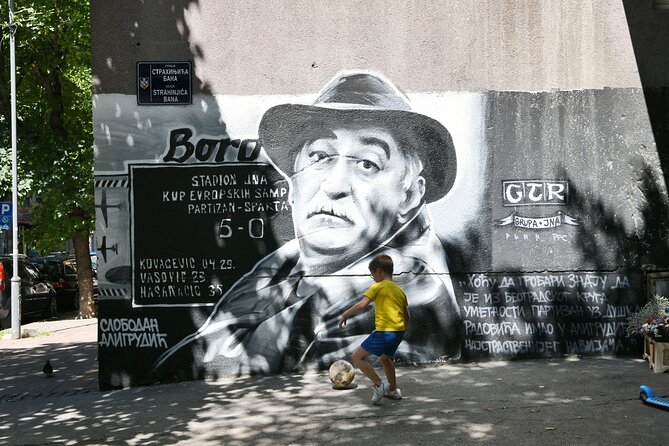
The tour continues to Cubura for about 30 minutes. This is presented as a well-known Red Star neighborhood, with graffiti connected to hooligan and supporter culture.
Cubura helps shift the focus away from the formal stadiums. Stadiums are obvious symbols of club identity, but neighborhood streets show how that identity appears in daily life. The guide can connect the markings here to the wider rivalry and explain what you are looking at instead of leaving you to decode every wall yourself.
This stop may appeal most to people who enjoy local details that do not appear in a standard first-time city itinerary. It is not a major monument or a polished attraction. The point is to see a side of Belgrade that is tied to residents, supporters, and street-level expression.
As with Dorcol, the condition and visibility of graffiti can change. That is not a flaw unique to this tour. It is simply part of visiting outdoor artwork that can be painted over, altered, or weathered.
Vracar and Njegoseva Street
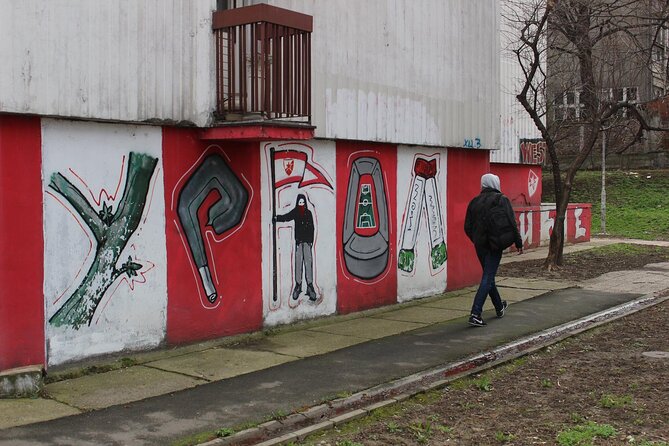
The final listed neighborhood stop is Vracar, including Njegoseva Street and graffiti associated with Grobari, the commonly used name for Partizan supporters. You get another 30 minutes here to compare the markings and stories with what you saw around Red Star areas.
The route now gives you several reference points: Dorcol’s divided identity, Partizan Stadium, Marakana, Cubura, and Vracar. That sequence makes the tour more useful than a random collection of graffiti stops. You see how club affiliation appears in different settings, from stadium grounds to residential streets.
Njegoseva Street also gives the tour a final urban setting before returning to the meeting point. You will have spent much of the afternoon moving between districts, so this stop reinforces the central idea: Belgrade football culture is part of the city itself, not something locked behind a ticket gate.
What the three-hour schedule feels like
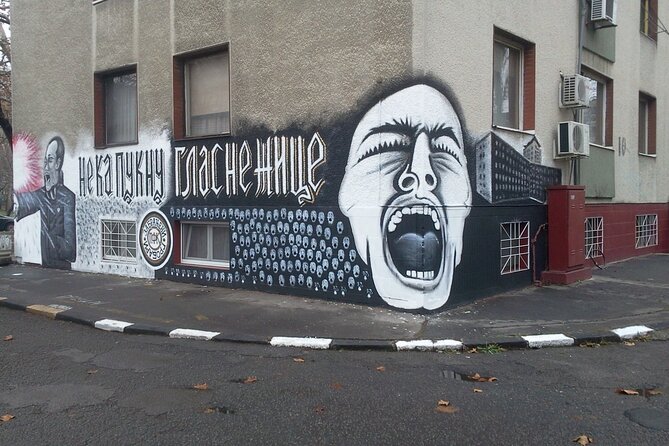
The full outing lasts about three hours. The listed stops add up to roughly three hours, although riding time and the exact pace may vary. The schedule has a sensible rhythm: a longer opening stop in Dorcol, two focused stadium visits, and shorter neighborhood stops.
You should expect frequent changes between riding and stopping. This is not a long continuous scooter ride, and it is not a walking tour with scooters parked for most of the time. The equipment helps you move between districts, while the stops provide the main content.
The tour normally operates Monday through Sunday from 11 a.m. to 6 p.m. The exact start time should be confirmed when you book. The meeting point is Maršala Birjuzova 23 in central Belgrade, and the activity returns there at the end.
The meeting point is near public transportation, which makes it easier to fit into a day of sightseeing. One useful plan is to schedule a Communist-themed tour in the morning, stop for lunch, and take this football tour in the afternoon. That combination gives you two very different ways to understand Belgrade.
Is $48.06 a fair price?
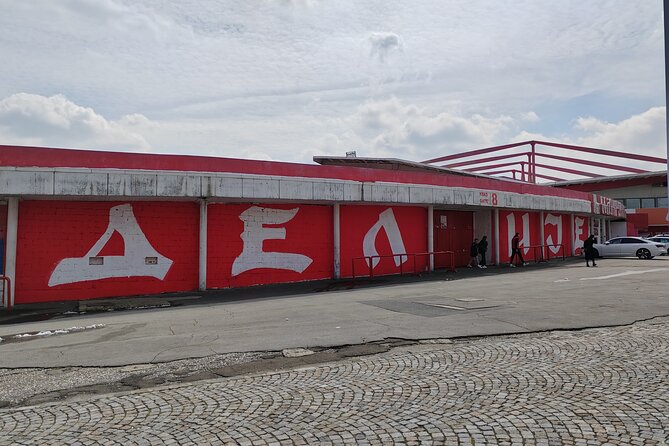
At $48.06 per person, the tour costs more than simply renting an e-scooter for a few hours. The comparison is important, but it is not quite apples to apples. You are paying for the scooter and helmet, the safety briefing, a planned route, access to two stadium areas, and a guide who can explain the meaning behind the graffiti.
The strongest value comes if you would otherwise struggle to find the stadiums and neighborhood markings on your own. You could ride around Belgrade independently, but you would likely miss the stories that connect Dorcol, Cubura, Vracar, Partizan, and Red Star.
The price is less compelling if you have little interest in football or street art. The tour does not include meals, personal expenses, or a match ticket. It also does not promise a museum visit or a formal stadium interior tour. You are paying for local interpretation and transport between football-related sites.
For a football fan, the price is reasonable because the outing combines two rival stadiums with several supporter neighborhoods in one afternoon. For a general sightseeing visitor, I would choose it only if the cultural angle genuinely appeals to you.
Who should book this experience?
I would recommend it to football fans, supporters interested in European club culture, photographers who enjoy murals, and visitors who want a less conventional look at Belgrade. It also suits people who like asking questions and hearing personal stories from guides such as Uros or Marko.
You do not need to support either Partizan or Red Star. In fact, a neutral attitude may help you appreciate the rivalry more clearly. The experience works best when you are interested in how sports shape neighborhoods and public art.
I would be more cautious if you want a quiet sightseeing ride, a traditional list of landmarks, or a museum-style presentation. The subject is specific, and the graffiti can be direct in tone. The tour is also weather-dependent, so outdoor conditions matter.
Confirmation arrives at booking. Free cancellation is available up to 24 hours before the start time for a full refund. Cancellations or changes made less than 24 hours before the start are not refunded or accepted. If poor weather or insufficient bookings cancel the activity, you are offered another date or experience, or a full refund.
Final call: a strong choice for the right interest
Book this tour if you want to understand Belgrade through football, graffiti, and the rivalry between Partizan and Red Star. The two stadium visits are the anchor, but Dorcol, Cubura, and Vracar make the experience feel more connected to ordinary city streets.
I like that the tour gives you both movement and explanation. You cover ground by scooter, then stop long enough to hear why a wall or neighborhood matters. The only real warning is that the subject is narrow. If you want football culture with a local guide and a practical route through several districts, $48.06 is a fair price. If not, choose a broader Belgrade tour instead.
FAQ
How long does the E-Scooter Belgrade Hooligans Tour last?
The tour lasts approximately three hours.
Where does the tour start?
It starts at Maršala Birjuzova 23, Beograd 11000, Serbia.
Where does the tour finish?
The activity ends back at the meeting point on Maršala Birjuzova 23.
What equipment is included?
An e-scooter, helmet, and safety briefing are included.
Which stadiums does the tour visit?
The tour visits Partizan Stadium and Red Star Belgrade Stadium, also known as Marakana.
Which Belgrade neighborhoods are included?
The route includes Dorcol, Cubura, and Vracar, including Njegoseva Street.
How many people can join the tour?
The maximum group size is 20 travelers.
What happens if the weather is poor?
The experience requires good weather. If it is canceled because of poor weather, you are offered a different date or a full refund.
Newly added around Belgrade
- E-Scooter Street Art Tour★ 4.5 · 6 reviews
- Belgrade Layover Private tour + E-Scooter Sighteeing★ 5.0 · 6 reviews
- E-Scooter Serbian Food Tour★ 5.0 · 3 reviews
- E-Scooter Communist Yugoslavia Tour★ 5.0 · 15 reviews
- Street Art E Scooter tour★ 5.0 · 3 reviews
- E-Scooter Serbian Food Tour★ 5.0 · 2 reviews
- E Scooter Communist tour New Belgrade★ 4.6 · 4 reviews
- E Scooter Craft Beer and Breweries tour★ 5.0 · 12 reviews
Electric Scooter Tours, compared.
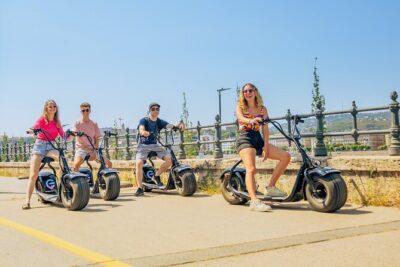
Budapest Small-Group Guided Tour on MonsteRoller e-Scooter
Read our review →
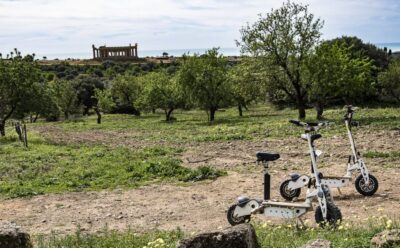
Agrigento: Valley of the Temples E-Scooter Tour
Read our review →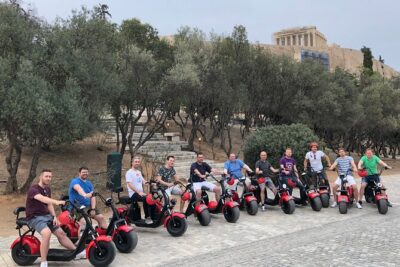
Athens Acropolis Official E-Scooter Guided Tour Fat E-Bike
Read our review →
Browse the lists this tour appears in