Review · VESPA SIDECAR TOURS
Rome 3-Hour Evening Vespa Sidecar Tour with Gourmet Pizza Tasting
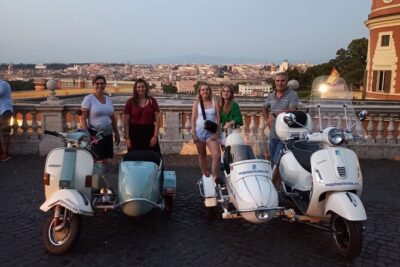
Rome looks different from a Vespa sidecar after sunset. You glide past fountains, palaces, ancient monuments, and narrow lanes while your guide talks directly to you through a headset. It is part sightseeing tour, part moving stage show, with Rome supplying the scenery.
I especially like the nighttime route, which brings the Trevi Fountain, St. Peter’s Square, and Janiculum Hill into a softer, more dramatic light. I also like the professional drivers and clear headsets: you can watch the city instead of worrying about traffic or missing the guide’s stories.
The main consideration is the seating. Each Vespa carries two passengers, and single-seat bookings are shared with another person. You may alternate between the sidecar and the seat behind the driver, so this is not the right choice if you want a private vehicle or dislike riding close to traffic.
Key points to know before booking
- Rome after dark: The 7 p.m. departure gives you illuminated fountains, squares, basilicas, and city views.
- Two people per Vespa: One passenger rides in the sidecar and one behind the driver, with seat changes possible at stops.
- Professional drivers only: You do not drive. You sit back, listen, and take in the streets.
- Pizza is included: The evening ends with a gourmet pizza tasting at Vico Pizza&Wine.
- Janiculum viewpoint: The 15-minute stop at Terrazza del Gianicolo adds a wide view over central Rome.
- Small group size: The maximum is 12 people, useful for a more personal guide experience.
Why a Vespa sidecar works so well in Rome
Rome is rewarding but not always easy to cover on foot. Its sights are spread across hills, broad avenues, tiny lanes, and busy squares. In three hours, a walking tour would need to choose only a few areas. The Vespa sidecar lets you connect many of them in one evening.
You do not drive, which matters. Rome’s traffic can be lively, and cobbled streets are not kind to anyone trying to watch the road and admire the buildings at the same time. Your professional driver handles the route while you sit behind the driver or in the sidecar.
The sidecar seat is the better spot for open views and photographs. The rear seat gives you a more traditional Vespa ride, but your view can be partly blocked by the driver. The operator allows passengers to swap seats during stops, a useful touch for couples, friends, or odd-numbered groups.
The ride is also a visual event in itself. Vespa sidecars attract attention, and the tour has a playful, cinematic quality without requiring you to operate a scooter. If you want a quiet, private evening, this may feel too public. If you like being part of the street scene, it adds to the fun.
More Night Scooter Tours in Italy
- Vespa Sidecar Tour By Night with Pickup
★ 5.0 · 1,803 reviews - Rome: Evening Vespa Sidecar City Tour
★ 4.9 · 104 reviews - Rome by Night Vespa Tour With Driver/Private Guide
★ 4.9 · 72 reviews
Starting at Piazza della Repubblica
The meeting point is at Piazza della Repubblica, with departure at 7 p.m. This grand circular square was shaped during Rome’s redevelopment after the city became Italy’s capital. Its Fontana delle Naiadi sits at the center, surrounded by large nineteenth-century buildings.
The square gives your guide an easy opening lesson in modern Rome, a city that grew rapidly after unification. It also makes a practical starting point because it is close to public transportation.
You will spend about 10 minutes here. That is enough for an introduction, a look at the fountain, and some orientation, but not a full architectural visit. Arrive ready to begin rather than expecting time for a meal or a long coffee before departure.
Quirinal Palace and the road toward Piazza Venezia
The next short stop is Palazzo del Quirinale, the presidential residence on Quirinal Hill. The hill is the highest of Rome’s traditional seven hills, and the palace has served popes, Italian kings, and presidents.
You will not tour the palace interior. The value here is the setting and the story. The Quirinal helps explain how Rome shifted from the center of the Papal States to the capital of a unified Italy.
The stop at the Monumento Nazionale a Vittorio Emanuele II follows the same pattern. This huge white monument in Piazza Venezia honors Victor Emmanuel II, the first king of unified Italy. It also contains the tomb of the Unknown Soldier, guarded beside an eternal flame.
The monument is sometimes admired and sometimes teased by Romans for its bright white scale. That tension makes it interesting. Your guide can place it in the story of Italian unification instead of leaving it as a giant building that simply appears beside the road.
The itinerary allows a stop here, but not an interior visit. Treat it as a photo and history pause.
The Pantheon area, with no interior entry
The Pantheon is one of Rome’s most remarkable ancient buildings. Completed in its present form in 126 AD, it is famous for its vast dome and central oculus, which brings daylight into the interior.
You have around 30 minutes in this area, but the Pantheon is closed during this evening tour, so admission is not included and you will not go inside. That point matters. If seeing the dome from within is a priority, book a separate visit for another time.
Even without entry, the exterior and surrounding square are worth your attention. The Pantheon’s columns, immense proportions, and age are easy to appreciate from outside. A half-hour also gives you time for photographs and a closer look at the lanes around the piazza.
This is one of the tour’s clearer limitations. The tour covers a lot of Rome, but it is not an inside-access sightseeing program. You are buying movement, views, stories, and atmosphere rather than monument admission.
More Night Scooter Tours in Rome
- Vespa Scooter Night Tour in Rome with Professional Photographer
★ 5.0 · 46 reviews - Rome: Evening Fiat 500 and Vespa Prosecco Tour
★ 5.0 · 34 reviews - Exclusive Rome by Night Vespa Tour
★ 5.0 · 30 reviews - Rome: Vespa Scooter Night Tour with Pro Photographer service
★ 5.0 · 24 reviews
Trevi Fountain and the Spanish Steps
The Trevi Fountain receives about 30 minutes, which is generous for a passing stop. At roughly 20 meters wide and 26 meters high, it is much larger than photographs suggest. Its present design was completed in the eighteenth century, although the water supply reaches back to the Aqua Virgo aqueduct of 19 BC.
At night, the fountain has the kind of theatrical setting that suits this tour. You can study the sculpted figures, take photographs, and listen to the story of the three streets that gave the fountain its name, Tre Vie.
The square can be crowded, even after sunset. Your driver cannot remove the crowds, and the sidecar does not provide a private viewing area. Still, the scheduled time lets you pause instead of making a quick roadside glance.
The Spanish Steps are another short scenic stop. Built in the early eighteenth century, they connect Piazza di Spagna with the church of Trinità dei Monti. Their broad staircase is one of Rome’s best-known meeting places.
You should remember that the steps are for looking and walking, not for sitting. Rome introduced rules against sitting on them, so follow local instructions. The stop gives you a chance to see the piazza, the staircase, and the elegant streets around it before returning to the Vespas.
Piazza del Popolo and St. Peter’s Square
Piazza del Popolo marks the northern entrance to Rome’s historic center. It once stood beside Porta Flaminia, the gateway used by people arriving along the northern road. Three important streets spread from the square: Via del Babuino, Via di Ripetta, and Via del Corso.
You will spend about five minutes here, so think of it as a quick orientation stop rather than a full visit. The square is broad and orderly, a useful contrast to the tight lanes near the Pantheon and Trevi Fountain.
The route then reaches St. Peter’s Square in Vatican City. Bernini designed the great oval piazza in the seventeenth century, using curved colonnades to frame the approach to St. Peter’s Basilica. The square can hold hundreds of thousands of people, yet at night its scale can feel almost calm from the edge.
This is an exterior stop. Entry to St. Peter’s Basilica or the Vatican Museums is not part of the tour. That keeps the schedule moving, but it also means you should plan a separate Vatican visit if you want interiors.
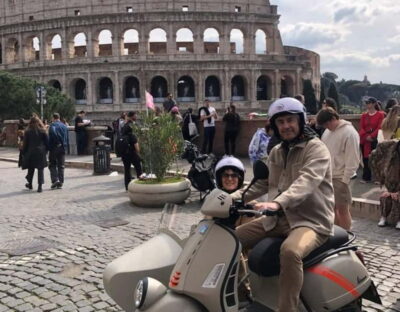
The nighttime ride through central Rome can include views of the Colosseum as well, adding another major Roman sight to the evening route. Because the tour covers many areas in a short time, exact viewing time at any one monument can vary with traffic and the group’s pace.
Janiculum Hill and Rome from above
Terrazza del Gianicolo, or Janiculum Hill, is one of the best reasons to choose this route. The hill sits just outside ancient Rome and offers a broad view over the city center. You get about 15 minutes here.
The viewpoint changes the rhythm of the evening. Most stops place you beside a monument, while Janiculum lets you look across Rome as a whole. Domes, rooftops, and the city’s older quarters spread below you.
Janiculum also carries a strong connection to Giuseppe Garibaldi and the defense of Rome. Statues and monuments along the hill recall the battles that took place here. Your guide’s live commentary helps connect the view to the political story of modern Italy.
Bring a light layer if you are visiting outside the hottest part of summer. The ride itself creates more wind than walking, and a hilltop pause may feel cooler than the city streets.
Trastevere, the Jewish Ghetto, and the pizza stop
The route passes through Rome’s more informal side, including alleyways, traditional trattorias, and the Jewish Ghetto. This part is valuable because it gives you more than a checklist of famous buildings. You see the parts of Rome built for daily life: narrow streets, local restaurants, and neighborhoods with distinct character.
The evening includes dinner at Vico Pizza&Wine. The advertised meal is a gourmet pizza tasting, and the stop also functions as an aperitivo break where you can relax with the group. Pizza and wine are part of the food experience described for the tour, but special dietary needs should be stated when booking.
There is an important restriction for anyone with celiac disease: gluten-free pizza is not available on this evening tour. An afternoon version of the tour offers gelato at a completely gluten-free gelateria, but that is a different product and should not be treated as part of this booking.
The meal makes the $181.41 price easier to assess. You are paying for three hours of transport, a professional driver, a live guide, headsets, helmet equipment, many central stops, and dinner. It is not a cheap way to see Rome, but it combines several services that would otherwise require separate bookings.
Value depends on your priorities. If you want museum entry, a long meal, or a private vehicle, the price may feel high. If you have only one evening and want a broad city overview without navigating Rome yourself, the cost is easier to justify.
What the guide and equipment add
The guide narrates the route live and uses headsets so you can hear while moving. That is far better than trying to catch spoken commentary over traffic. The communication is also interactive, so you can ask questions rather than listening to a fixed recording.
Several guides and drivers have been singled out for their friendly approach, including Claudio, Monica, Matteo, Alice, Orso, Alessandro, and John Franco. Staff assignments can change, but the important point is the mix of roles: the driver focuses on safe movement and the guide focuses on Rome’s stories and practical advice.
Drivers have also helped older riders get in and out of the sidecar. That is useful because climbing into the vehicle may take more effort than stepping into a car. Still, the tour is not permitted for pregnant participants, and the operator lists clear size limits: 118 kilograms or 260 pounds for the rear saddle, and 110 kilograms or 242 pounds with a maximum height of 1.90 meters for the sidecar.
Children must be at least five years old and accompanied by an adult. A child may sit behind the driver only if taller than 150 centimeters. Otherwise, the child rides in the sidecar.
The operator provides approved CE helmets and sterilized disposable head covers. These details are small but reassuring, particularly on a warm evening when you may prefer a fresh cover between your head and the helmet.
Who should book this evening ride?
I would choose this tour for a first or second night in Rome, when you want a broad look at the city before deciding where to return. It suits couples, friends, and solo visitors who enjoy a social outing and do not mind sharing a Vespa.
It is also a strong choice for older participants who want help with transport and boarding, provided the physical requirements work for them. The drivers handle the scooters, so you avoid the stress of driving in Rome.
You may want a different tour if you need a private vehicle. A booking for one seat means sharing the Vespa with another person, and odd-numbered groups must alternate between the sidecar and rear seat at stops. Groups of two have a simpler arrangement, but even then, the ride is shared with the driver.
This is also not the right product for serious monument collectors. The Pantheon is closed during the tour, and the major squares and palaces are exterior visits. Think of the evening as a moving introduction to Rome, not a substitute for the Colosseum, Vatican, or Pantheon interiors.
Practical details for the three-hour outing
The total duration is about three hours, including travel between stops. The tour begins at 7 p.m. in Piazza della Repubblica and returns to the same meeting point.
The maximum group size is 12 people. That is small enough for direct contact with the guide, though each Vespa still carries two passengers. You receive confirmation when booking, and the activity is offered in English.
The tour requires good weather. If poor conditions force cancellation, you can choose another date or receive a full refund. You can also cancel for a full refund up to 24 hours before the start time. Changes or cancellations inside that window are not accepted.
Service animals are allowed, and the meeting point is near public transportation. Most people can participate, but the operator’s age, weight, height, pregnancy, and seating rules should be checked before you pay.
Should you book the Rome Vespa sidecar tour?
Book it if you want Rome’s famous sights linked by motion, stories, and night air. The best parts are the illuminated fountains, the Janiculum view, the local drivers, and the included pizza stop. You also get a useful overview of neighborhoods that can be hard to connect on foot.
Skip it if you need private transport, gluten-free pizza, indoor monument access, or a calm, slow-paced evening. At $181.41 per person, this is a splurge, but it packs sightseeing, transport, commentary, equipment, and dinner into one lively outing. For a first Rome visit with limited time, that combination can be worth the price.
FAQ
What time does the tour start?
The tour starts at 7 p.m.
Where does the tour begin?
It begins at P.za della Repubblica, 41, 00185 Rome, Italy.
Where does the tour end?
The tour ends back at the meeting point in Piazza della Repubblica.
How long is the tour?
The experience lasts approximately three hours, including travel time between stops.
Do I drive the Vespa?
No. Professional drivers operate the Vespas, so you sit behind the driver or in the sidecar.
How many people can ride in one Vespa?
Each Vespa can carry two passengers, with one person in the sidecar and one behind the driver. Seats may be swapped during stops.
Is the Pantheon visited inside?
No. The Pantheon is closed during this tour, so you will not enter the monument and admission is not included.
Is food included?
Yes. The tour includes a gourmet pizza tasting at Vico Pizza&Wine. Special dietary requirements should be provided when booking. Gluten-free pizza is not available for guests with celiac disease.
Can children join the tour?
Yes, but children must be at least five years old and accompanied by an adult. Children shorter than 150 centimeters must sit in the sidecar.
More Vespa Tours in Italy
- Rome Morning Vespa Sidecar Tour in Rome with Cappuccino
★ 5.0 · 1,771 reviews - Rome: Explore the City by Vespa with an Optional Photoshoot
★ 5.0 · 1,103 reviews - Rome Vespa Scooter Tour with Professional Photographer
★ 5.0 · 857 reviews - Rome: Highlights Vespa Sidecar Tour with Coffee and Gelato
★ 4.9 · 747 reviews
More Scooter Food Tours in Rome
- Rome Afternoon Sightseeing Vespa Sidecar Tour with Gourmet Gelato
★ 5.0 · 692 reviews - Rome: Guided City Food Tour by Vespa and Tastings
★ 4.9 · 195 reviews - Afternoon Vespa Sidecar Tour with Gourmet Gelato Stop
★ 4.9 · 18 reviews - Rome Vespa Sidecar Food Tour with Local Tastings
★ 5.0 · 14 reviews
Newly added around Rome
- Vespa tour with Professional Photoshoot★ 4.8 · 22 reviews
- Vespa Voyage: Scenic Routes of Rome★ 5.0 · 41 reviews
- Vespa – Wine and Photography service in Rome★ 5.0 · 32 reviews
- Rome: Vespa Tour with Gelato and Photos★ 4.9 · 7 reviews
- Vespa Tour with Professional Photographer★ 4.9 · 9 reviews
- Vespa Tour – Explore Ancient Rome★ 5.0 · 5 reviews
- Food tour & Vespa tour & Photo tour! All included★ 5.0 · 2 reviews
- Vespa scooter tour in Rome with Pro-Photographer★ 4.9 · 21 reviews
Vespa Sidecar Tours, compared.
Rome Morning Vespa Sidecar Tour in Rome with Cappuccino
Read our review →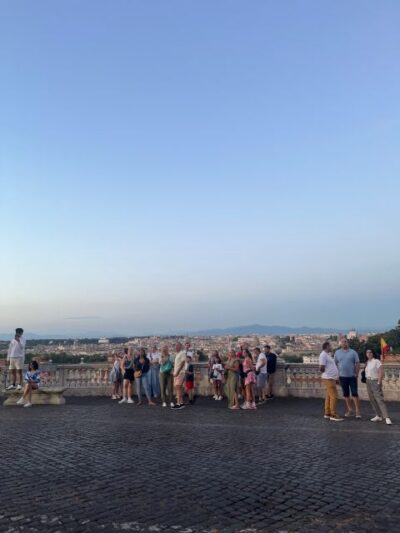
Highlights Vespa Sidecar Tour with Coffee and Gelato
Read our review →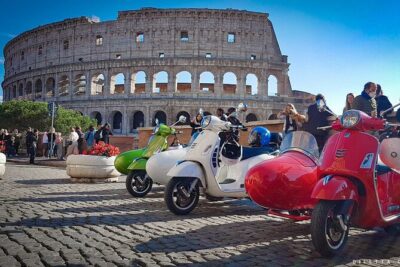
Rome Afternoon Sightseeing Vespa Sidecar Tour with Gourmet Gelato
Read our review →
Vespa Sidecar Tour In Rome with Pickup, Drop-off, Gelato included
Read our review →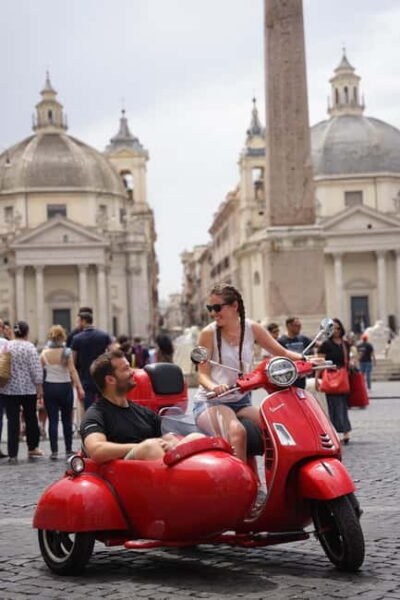
Rome Vespa Sidecar Tour: 90-Minute Panoramic Experience
Read our review →