
Review · VESPA TOURS
Vespa Tour HANOI BACK STREETS: FOOD+LOCAL LIFE+CULTURE & FUN
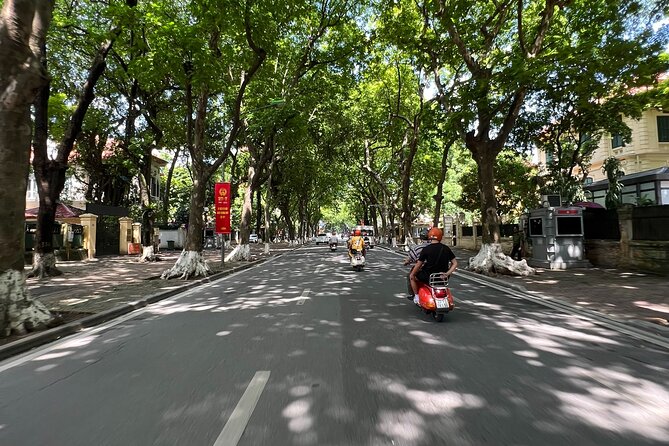
Hanoi’s best stories are often found away from its postcard sights, and this vintage Vespa ride takes you into the city’s working neighborhoods, narrow lanes, old housing blocks, river farms, and railway-side homes. You will see places that are difficult to reach by taxi, while your driver handles the traffic and your guide explains what you are seeing.
I like the contrast between Banana Island’s floating home and small farms and the worn apartment buildings near Nguyen Cong Tru. I also like the way the route mixes major sights, such as Long Bien Bridge and the B-52 lake, with ordinary Hanoi life. The main consideration is the 1.5-kilometer walk on Banana Island, plus the heat, traffic, and uneven streets that come with a motorbike tour.
Key points at a glance
- Ride through Hanoi’s back streets: Travel by vintage Vespa with a local driver rather than staying on the main tourist roads.
- See old Hanoi up close: Explore a flea market and the Nguyen Cong Tru apartment area, linked to the city’s subsidy period of 40 to 50 years ago.
- Walk on Banana Island: See farming plots, a floating village, a river beach, and an 86-year-old couple’s tiny floating home.
- Cover several distant districts: The route includes Long Bien Bridge, West Lake, Ngoc Ha village, the mosaic wall, the B-52 lake, and Train Street.
- Finish with Vietnamese food: Lunch is served at a local restaurant near Hanoi Train Station.
- Small-group format: The maximum group size is 12, with hotel pickup, a four-hour schedule, and an English-speaking guide.
Why this Vespa tour shows you another Hanoi
At $57.60 per person, this is not simply a ride around the center. You are paying for a driver, private transportation, a guide, a vintage Vespa, hotel pickup and drop-off, entrance costs, and lunch. The real value is the route. It connects several outlying places that would be awkward to visit independently in half a day.
You ride as a passenger, so you can watch the city instead of concentrating on directions. Hanoi traffic can be hard to read on foot, particularly when roads widen, motorbikes merge from every angle, and alleys suddenly narrow. Having an experienced rider at the controls makes the outing easier, though you should still be comfortable sitting on a motorbike for several hours.
The group limit of 12 keeps the experience more manageable than a large bus excursion. It is still a group outing, not a private tour, and the number of Vespas can affect how quickly the group moves through tight streets. Past guide feedback names Tam, Chris, and Alex, with particular praise for making passengers feel comfortable and for showing places they would not normally reach.
The schedule runs from 8:30 a.m. to 12:30 p.m., or from 1 p.m. to 5 p.m. The morning trip ends with lunch. The afternoon option is listed with the same four-hour duration, but the supplied details do not specify whether lunch timing changes, so ask the operator when choosing the later start.
More Vespa Tours in Hanoi
- Vespa City Tour &Train Street Female With Ao Dai Riders 4,5 Hours
★ 5.0 · 314 reviews - Hanoi Vespa Tours: Food + Culture + Fun on Army Vespa
★ 5.0 · 279 reviews - Vespa Female Ao Dai riders Night Street Food + See Train Street
★ 5.0 · 254 reviews
Starting at St. Joseph’s Cathedral
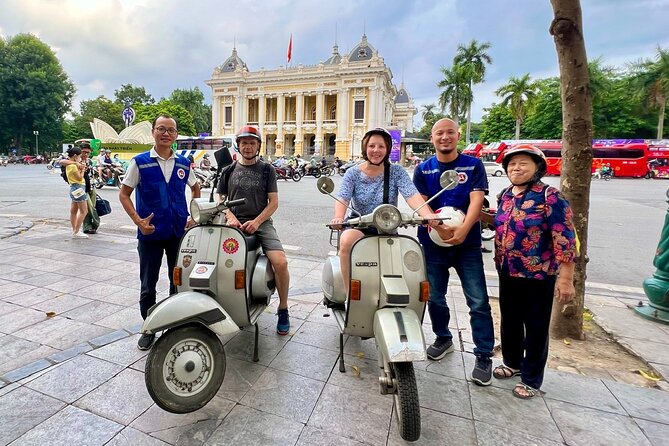
The listed meeting point is St. Joseph’s Cathedral at 1 P. Nhà Thờ in Hoan Kiem District. Hotel pickup is included, so you should provide your hotel name and address when booking. The ride begins with a short safety briefing before you join the group for a photo outside the cathedral.
The cathedral is a useful first stop because it places you in central Hanoi before the route moves into less familiar districts. Its neo-Gothic design dates from the French colonial period, and it is the oldest Roman Catholic church in Hanoi. You have about 20 minutes here, enough for a look around and photographs rather than a long architectural visit.
This brief stop also gives you time to meet your driver and guide. If you are nervous about riding pillion, say so before leaving. The experience is designed around local drivers, and the most useful early question is how to communicate if you need to slow down or stop.
The flea market and Nguyen Cong Tru’s old apartments
The first major neighborhood stop is Phố Chùa Vua, home to a flea market and the old apartment buildings around Nguyen Cong Tru. This is one of the most revealing parts of the route because it is less polished than central Hanoi and more tied to daily work.
The market specializes in mechanical accessories and repair-related goods. Its roots go back to the subsidy period, when the government distributed many products and supplies did not always meet demand. Markets like this developed to fill the gaps. You will see rows of small shops and a neighborhood economy that feels practical rather than arranged for sightseeing.
The nearby apartment blocks are described as a living museum of Hanoi from 40 to 50 years ago. That does not mean a preserved museum with labels and displays. Instead, the interest lies in seeing old housing, narrow passages, and the way people continue to use these spaces.
You spend about 20 minutes here. That is enough to walk through the market and get a sense of the area, but not enough for a detailed shopping stop. The focus is observation and explanation. Watch your step, keep your belongings close in crowded sections, and let the guide handle the route through the market.
Long Bien Bridge and the walk to Banana Island
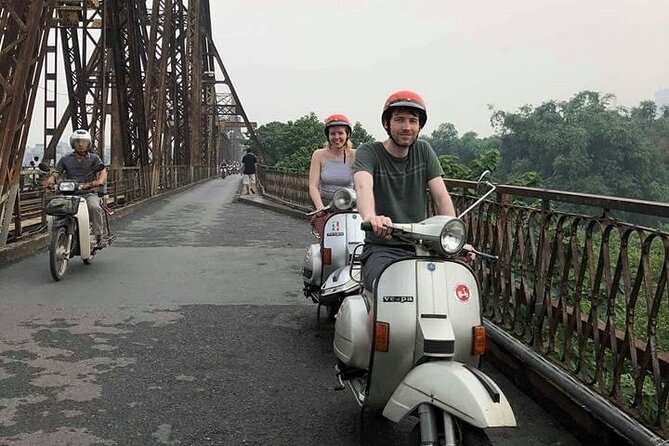
From the city center, the Vespas head toward Long Bien Bridge. Built by the French company Daydé and Pillé in 1898, the bridge crosses the Red River and remains one of Hanoi’s defining structures. The stop gives you an elevated view toward the river before the tour moves into a very different setting.
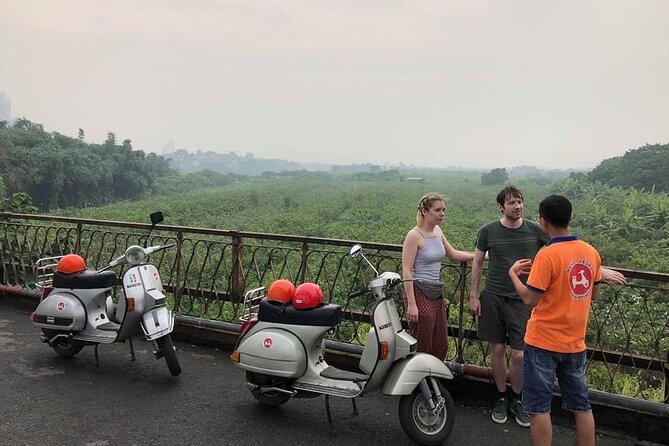
The next section is a 1.5-kilometer walk on Banana Island. This is the tour’s most unusual change of pace. You leave the Vespa behind and walk among farming activity, a floating village, an outdoor gym, and a river beach. The experience is not a formal attraction. It is a look at how pieces of rural life continue alongside a large capital city.
The tour also introduces you to an 86-year-old couple living in a small floating house. Their home is presented as a direct way to see one of Hanoi’s sharp contrasts, with expensive urban development on one side and modest river living on the other. You should approach this visit respectfully. The point is contact and context, not treating someone’s home as a photo prop.
Banana Island is where practical preparation matters most. The walk is substantial compared with the other stops, and the route may include uneven ground. Wear shoes you can walk in and bring water. The supplied tour details do not promise shade, so a hat and sun protection are sensible, especially on the afternoon departure.
This part may be less appealing if you want a pure sightseeing ride with little walking. I think it is one of the strongest parts for anyone interested in local life, but it requires a little more effort than stopping at a monument, taking a photo, and getting back on the bike.
More Vespa Tours in Vietnam
- Hanoi Vespa Countryside Tour With Female Ao Dai Riders Half Day
★ 5.0 · 117 reviews - Hanoi Vespa Tours: Hanoi After Dark Vespa Food Tours
★ 5.0 · 83 reviews - Hanoi Back Streets Vespa Tours: Hanoi Vintage Vespa Tours City
★ 5.0 · 82 reviews - Hanoi Back Streets Vespa Tours: Hanoi Insider Vintage Vespa Tour
★ 5.0 · 56 reviews
The mosaic wall, West Lake, and Ngoc Ha lanes
Back on the Vespa, you ride along Hanoi’s world-record mosaic wall and get a glimpse of West Lake. The route then turns into the zigzag alleys of Ngoc Ha village. These lanes show how quickly Hanoi can shift from broad roads to tight residential passages.
The mosaic wall is a quick visual stop rather than a full art tour. West Lake offers a change in scenery, while Ngoc Ha provides the more personal view of local neighborhoods. The narrow alleys are part of the appeal, but they also explain why a Vespa tour works here: a larger vehicle would miss much of the route.
This section helps connect the bigger sights with the smaller ones. You may see the city’s major road system one moment and a quiet lane lined with homes the next. The guide’s role matters here because the value comes less from checking off a landmark and more from understanding how the neighborhoods fit together.
The B-52 lake and Hanoi’s wartime memory
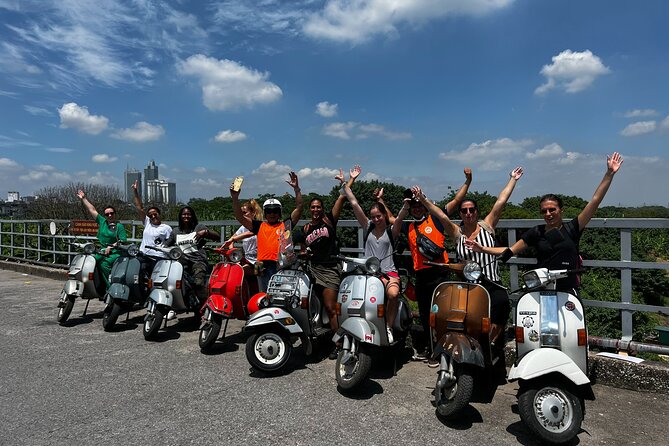
The ride continues toward Huu Tiep Lake, also called the B-52 lake. Here you can see the remains of a US aircraft that came down during the December 1972 bombing of Hanoi. The stop lasts about 30 minutes and places a specific wartime object in an ordinary residential setting.
The location is not presented as a large military museum. That is part of its impact. You see the aircraft remains in a neighborhood, surrounded by daily city life. The setting encourages a quieter look at Hanoi’s wartime past without turning the entire tour into a history lecture.
Because the stop is short, anyone seeking detailed military history should not expect a full explanation of the bombing campaign. You get a glimpse of the site and the chance to ask questions. The value comes from seeing a piece of history where people live, work, and pass through today.
Train Street and the limits of a famous attraction
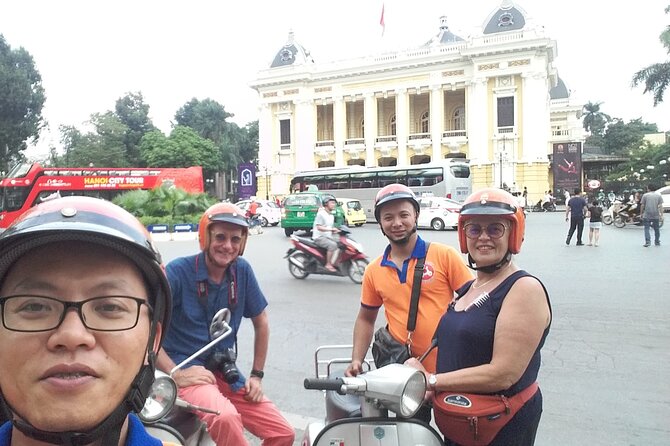
The Train Street stop takes you to Duờng Tau, where homes sit only a few centimeters from the railway tracks. You walk along the line and have a drink while waiting for a train to pass. The tour operator notes that some sections are temporarily closed by local authorities for safety, but the guides know when and where a train may appear.
This is an important qualification. Train Street access can change, and the route may not look exactly like the photographs you have seen online. The tour does not promise unrestricted access to every famous section. Instead, it aims to take you to a location that can be visited safely at the time of your tour.
Do not treat the train arrival as guaranteed entertainment on demand. The timing depends on the railway schedule and local access conditions. Your guide will manage the visit, but you still need to follow instructions closely. The tracks are active infrastructure, not a stage set.
The stop lasts about 30 minutes. That gives you time to walk, look at the close-set houses, and have a drink. If you want a long café visit or a carefully timed photograph, this may feel brief. If you want a responsible look at one of Hanoi’s most talked-about sights, it fits well into the wider route.
Lunch near Hanoi Train Station
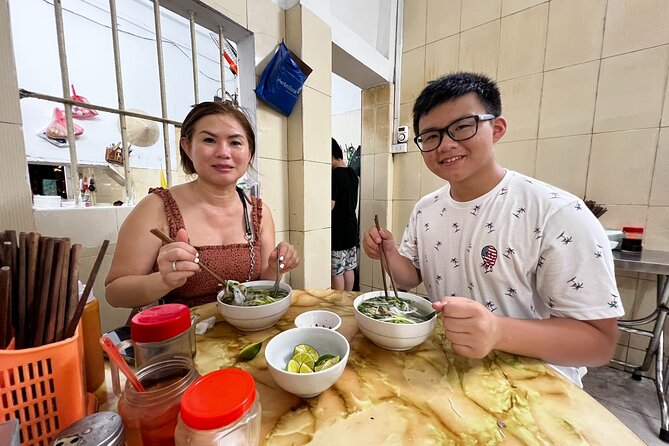
The final stop is a local Vietnamese restaurant near Hanoi Train Station. Lunch is included, and the tour describes it as a chance to sample the core flavors of Vietnamese cooking in a cozy local setting.
The information provided does not name the dishes or the restaurant, so you should not book this expecting a fixed tasting menu or a particular specialty. Think of it as a practical meal at the end of a busy morning. After the ride, walking, and heat, sitting down to eat is a welcome finish.
The meal also gives you a final chance to ask the guide about dishes you tried or places you passed. Since personal expenses are not included, bring some money for anything beyond the supplied lunch and drinks.
The listed end point is the meeting point, while the inclusions also state hotel drop-off. Because those details are presented together, confirm the exact return arrangement if you need to be taken back to your hotel rather than returned to the cathedral area.
Comfort, safety, and what to bring
The tour uses vintage Vespas with local riders and includes a safety briefing. You do not drive your own scooter. That removes the need to navigate Hanoi traffic yourself, but you remain exposed to weather, road dust, noise, and the movement of city traffic.
I would wear closed shoes with a firm sole, light clothing, and sun protection. The Banana Island walk makes comfortable footwear more important than fashionable footwear. Keep your phone and camera secure while riding, and bring water even though the tour includes a drink at Train Street.
The tour is listed as suitable for most participants, with a maximum of 12 people. Still, anyone with difficulty sitting on a motorbike or walking 1.5 kilometers should think carefully before booking. The experience requires good weather. If rain or poor conditions cancel the tour, you are offered another date or a full refund.
Who will get the most from the $57.60 price?
I think the price works best for you if you want to see several sides of Hanoi in one half-day. The route covers old housing, a working market, a river community, wartime history, a famous railway lane, and a local meal. Reaching all of those places independently would take more planning and several separate rides.
The tour is also a good match if you want a guide to handle transportation while you focus on the streets. The English-speaking guide adds value at the market, Banana Island, and the B-52 lake, where context makes the stops more meaningful.
The price may feel less attractive if you only want Hanoi’s central landmarks, a relaxed café outing, or a short photo ride. You spend four hours on the move, and the route includes walking and changing surroundings rather than long visits at one site. The included lunch, transportation, and driver help justify the cost, but the real reason to book is the access to everyday neighborhoods.
Should you book the Hanoi Back Streets Vespa Tour?
Book this tour if you want local neighborhoods over a standard city loop, are comfortable riding pillion, and like a full schedule with plenty of variety. Banana Island, Nguyen Cong Tru, and the floating house give the tour a more personal feel than a route built only around monuments.
Choose something else if you dislike motorbikes, need guaranteed access to every part of Train Street, or want a slow day with little walking. For the right visitor, the $57.60 cost is fair because it combines transport, guiding, lunch, and places that are not easy to connect on your own. Guides named Tam, Chris, and Alex are associated with the experience, and their role is especially important in making the ride feel comfortable and organized.
FAQ
How long does the Hanoi Back Streets Vespa Tour last?
The tour lasts approximately four hours. The morning departure runs from 8:30 a.m. to 12:30 p.m., and the afternoon departure runs from 1 p.m. to 5 p.m.
Where does the tour start?
The listed meeting point is St. Joseph’s Cathedral at 1 P. Nhà Thờ, Hàng Trống, Hoan Kiem, Hanoi. Hotel pickup is offered, so you should provide your hotel name and address when booking.
Is lunch included?
Yes. Lunch at a local Vietnamese restaurant near Hanoi Train Station is included in the tour price.
Do I drive the Vespa myself?
No. The experience includes a vintage Vespa with a safe local rider, along with an English-speaking guide.
Is Train Street guaranteed to be open?
Some sections of Train Street may be temporarily closed by local authorities for safety. The operator states that the guides know when and where a train may appear and will select an accessible location.
What happens if bad weather cancels the tour?
The experience requires good weather. If poor weather causes cancellation, you will be offered a different date or a full refund. You can also cancel for a full refund if you do so at least 24 hours before the start time.
More rides that eat their way around Hanoi
- Female Riders Vespa Night Street Food + Train Street food 4 Hours
★ 5.0 · 35 reviews - Hanoi Food Tours: Hanoi Foodie Scooter Tour Led By Women
★ 5.0 · 31 reviews - Hanoi Vespa Food Tours Led By Women
★ 5.0 · 28 reviews - Vespa Food Tour Hanoi After Dark 3.5 hrs_TOP SERVICE, MAX VALUE
★ 5.0 · 24 reviews
More food and drink stops around Hanoi
- Hanoi Sightseeing & Food Tour by Scooter with Train Street
★ 5.0 · 72 reviews - Hanoi Michelin Star Food Tour Via Jeep, Vespa or Motorbike
★ 5.0 · 44 reviews - Hanoi City Street Food Night Tour by Motorscooter
★ 5.0 · 42 reviews - Amazing Vespa Night Tour For Food Lover
★ 5.0 · 38 reviews
Newly added around Hanoi
- Hanoi Vespa After Dark Street food + Train Street+ Live Music★ 5.0 · 18 reviews
- Beautiful Female Riders Vespa Red River Countryside Tour 5 Hours★ 5.0 · 23 reviews
- Hanoi Evening Vespa Food Tour 04hrs★ 5.0 · 2 reviews
- Hanoi Vespa Tour Explore Red River Delta & Rural Villages 5 Hours★ 5.0 · 17 reviews
- Female Riders Vespa Night Street Food + Train Street food 4 Hours★ 5.0 · 35 reviews
- Vespa Tour Hanoi Life Rustic★ 5.0 · 4 reviews
- HANOI MUST SEE SITES Vespa Tour★ 5.0 · 3 reviews
- Hanoi Vespa Full Day City & Countryside with Female Ao Dai Riders★ 5.0 · 26 reviews
Vespa Tours, compared.

Florence Vespa Tour: Tuscan Hills and Italian Cuisine
Read our review →

Rome Morning Vespa Sidecar Tour in Rome with Cappuccino
Read our review →
Chianti Vespa Tour with Lunch from Florence & E-car Option
Read our review →
Explore the City by Vespa with an Optional Photoshoot
Read our review →
Rome Vespa Scooter Tour with Professional Photographer
Read our review →
Highlights Vespa Sidecar Tour with Coffee and Gelato
Read our review →
Browse the lists this tour appears in